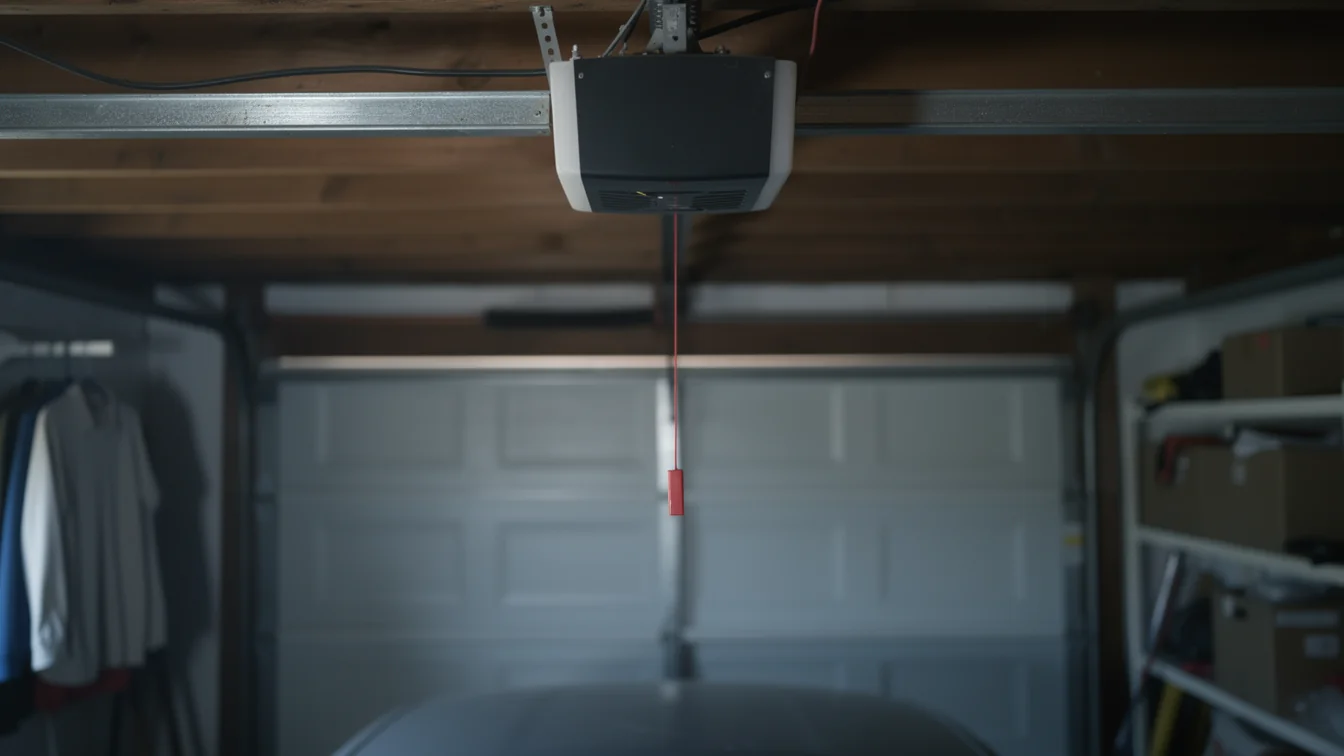
When the Power Goes Out, Your Opener Goes Quiet Too
How Greensboro's 1980s-era housing stock and cold-moderate winters affect garage door openers during power cuts, plus what to check before the next outage.
Read moreBlogGreensboro, NC · 4 min read
Many Greensboro homes went up between 1968 and 2002, before stricter insulation codes. Here's what that means for your garage door and how to check it.
Local detail
Most of the housing stock across the Greensboro service area was built between 1968 and 2002, with the median home dating to 1987. That spans roughly nineteen named neighborhoods and subdivisions, and the bulk of it went up in the 1980s and 90s, before the garage door industry treated insulation as standard rather than optional. A door built in that window is very likely a single-layer steel skin over nothing, or a thin foam board glued in as an afterthought. It wasn't a defect when it was installed. Building codes at the time didn't ask for more, and most buyers weren't asking either. The problem shows up now, thirty-plus years later, as the steel ages, the foam (if there is any) breaks down, and the door is still doing the same job it always did with none of the thermal performance a modern door has. If your house falls in that 1968-2002 build window, which covers most of this area, your garage door is a reasonable suspect any time that room runs cold, damp, or noisy.
The area
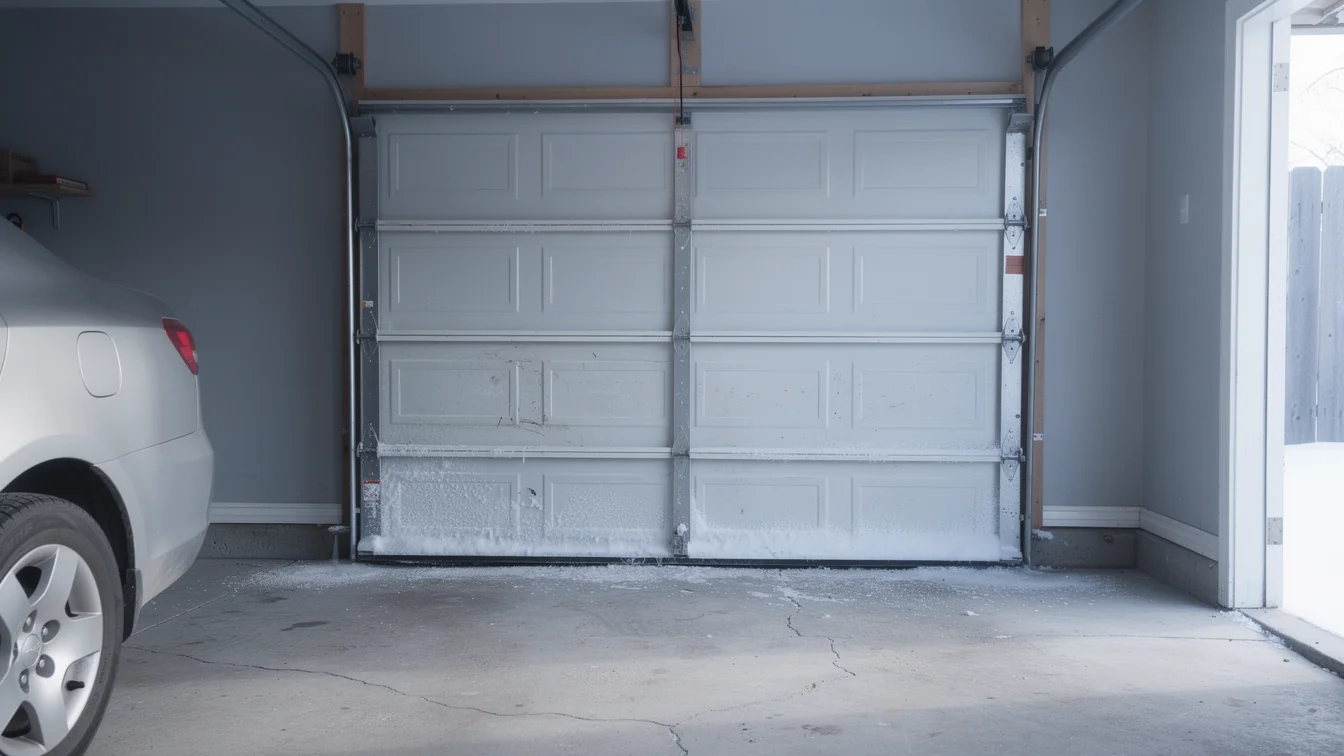
The climate here is a cold-moderate band, not the deep freeze of farther north but enough swing to matter. Winter cold makes an uninsulated steel panel contract and the seams tighten up, which is when you hear new creaks out of hardware that was quiet all summer. That same cold hits condensation hardest on an uninsulated door - warm house air meeting a cold steel skin beads water on the inside face, and on an attached garage that moisture problem doesn't stay in the garage. Summer swings the other way: the panel heats, expands, and on an older door with worn weatherstripping that expansion can be enough to bind a track that was fine in January. Spring and fall are the forgiving months, which is also why most owners never notice the door is working against itself until the first hard cold snap or the first humid week hits. A door from the 1987 median build year has been through three decades of that cycle twice a year.
What we find
Start at the bottom seal - on a door this old it's likely original rubber, cracked or flattened, and it's your only real barrier against ground-level cold and water. Next, press a hand flat against the inside of a panel on a cold morning; if it's cold to the touch and you can feel moisture, there's no insulation layer doing any work. Check the weatherstripping around the frame the same way - brittle or gapped strips let cold air track in around the whole perimeter, not just the bottom. Look at the track bolts and hinges for rust streaks, which on an older uninsulated door usually trace back to condensation dripping down inside the panel seams rather than a roof leak. If the door feels heavier to lift by hand in winter than in summer, that's the steel and the spring tension reacting to temperature, and it's worth having someone check the spring sizing rather than just fighting it. None of this requires replacing the door outright - some of it is a seal and weatherstrip job, some of it genuinely isn't worth fixing piecemeal.
How we work
Put the housing era and the climate together and the pattern is specific to this area, not generic wear. A door built in the 1980s or 90s, which describes most of what's standing across this service area, was made to a cold-moderate climate's older expectations: keep the rain and wind out, nothing more. Three decades of seasonal contraction and expansion loosens hardware that was torqued for a door in better shape, and the lack of insulation means every cold front and every humid stretch does its work on bare steel. That's a slower failure than a storm-damaged panel, and it's easy to write off as the room just being drafty. It's usually the door. The honest limitation here: if the door is original to a 1970s or early-80s build, insulation retrofits and seal replacement can only do so much against a panel that's genuinely worn thin, and at that point a straight repair bill starts costing more than it should relative to a new insulated door.
Questions
Knock on the inside face of a panel. A hollow, tinny sound with nothing behind it means no insulation layer. A dense, muffled knock usually means foam board or polyurethane was added. Given that most homes in this area were built in the 1980s and 90s, a hollow sound is the more common result, especially on a door that's never been replaced.
On an older uninsulated steel door, yes - that moisture runs down into hinge points and track hardware and accelerates rust over time, and in an attached garage it adds humidity to a space next to living areas. It's a symptom of the door's age and construction, not a one-time weather event.
Once a door is original to a build from the earlier end of that 1968-2002 range, yes, often. Seals and weatherstripping are a fair repair. A thinned, dented steel skin with no insulation layer behind it is a different conversation, and we'll tell you straight when that's where you are.
Recommendation
More garage door guides for Greensboro homeowners.
How Greensboro's 1980s-era housing stock and cold-moderate winters affect garage door openers during power cuts, plus what to check before the next outage.
Read more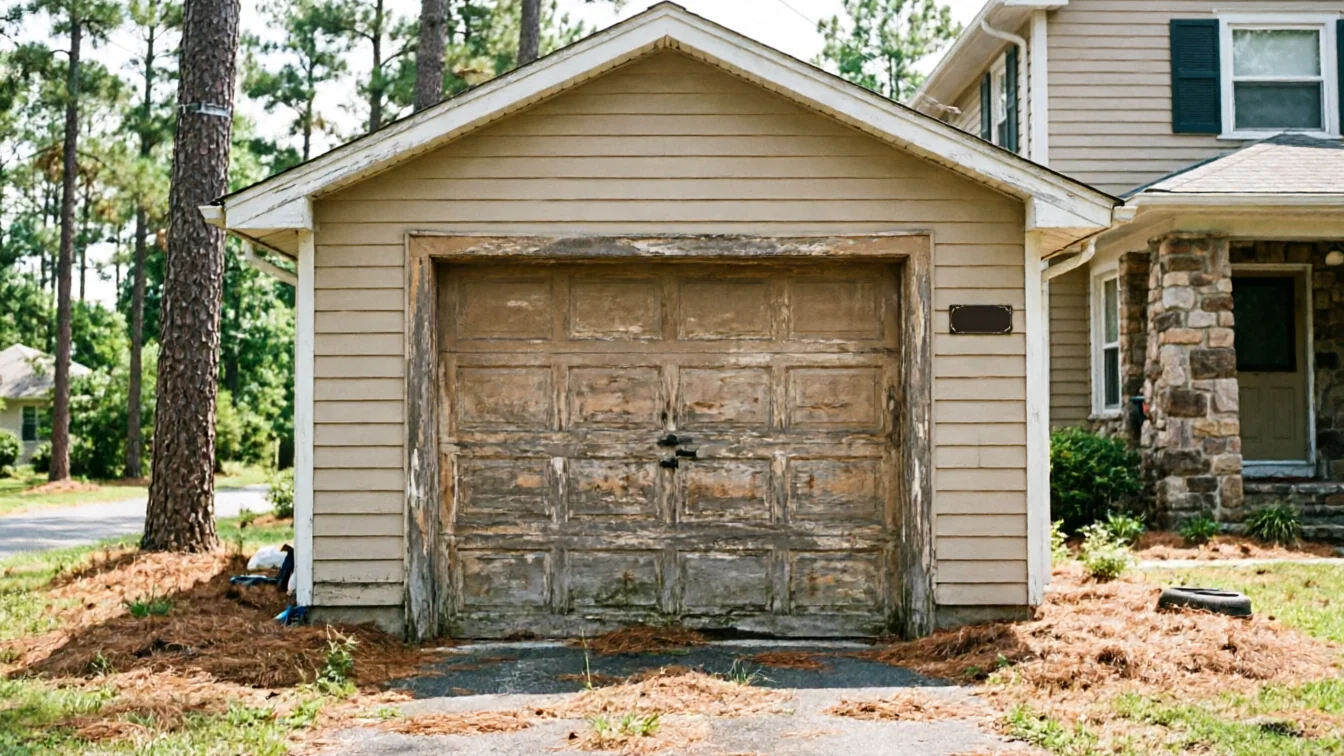
Greensboro homes built mostly between 1968 and 2002 usually have garage doors worth repairing, not replacing outright.
Read more
Greensboro homes built mostly between 1968 and 2002 carry original hardware aging out together.
Read moreReady when you are
Greensboro Garage Door Pros repairs and installs garage doors, springs and openers in Greensboro, NC and the surrounding area.