
What That Sound From Your Garage Door Is Actually Telling You
Greensboro homes built mostly between 1968 and 2002 carry original hardware aging out together.
Read moreBlogGreensboro, NC · 4 min read
Greensboro homes built mostly between 1968 and 2002 carry original track hardware that struggles in cold, humid swings. Here's what actually knocks a door off its rails.
Local detail
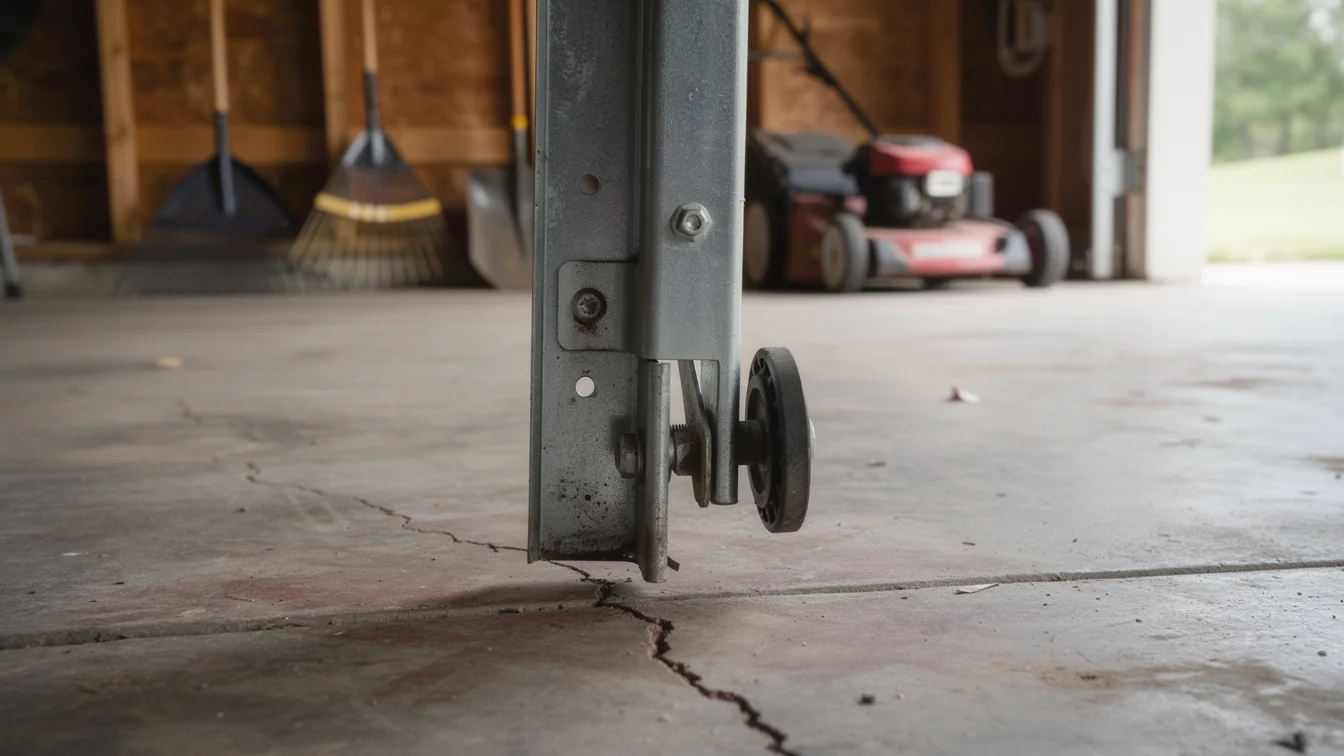
A door comes off track for one of a handful of reasons, and in Greensboro the age of the housing stock narrows the list fast. Most homes across the service area went up between 1968 and 2002, with the bulk of that from the 1980s and 90s, so a lot of garages are running on track brackets and rollers that are 25 to 45 years old. That hardware was fine when it was new. Decades of thermal cycling loosen the lag screws holding the vertical track to the jamb, and once a bracket shifts even an eighth of an inch, the rollers start riding the edge of the rail instead of the center.
The other common cause is a broken cable or an unbalanced spring pulling the door unevenly, which torques the bottom panel sideways until a roller jumps the track. Neither cause is cosmetic - once a door is off track, the opener is fighting geometry it can't win, and running it again usually bends the track further or strips the gear. If your door is hanging at an angle or one side dropped before the other, that's the tell.
The area
Greensboro sits in a cold-moderate climate band, which means the garage goes through real freeze-thaw swings every winter rather than staying in one temperature range all year. That cycling matters for track hardware specifically. Metal brackets contract in a hard overnight freeze and expand again by afternoon, and over enough winters that movement works the mounting screws loose in the jamb framing - more of an issue in the older end of the 1968-2002 stock where the original lumber has shrunk a little over the decades.
Spring and fall bring the biggest daily temperature swings, and that's when we see the most off-track calls - not because anything breaks suddenly, but because hardware that's been loosening all year finally lets a roller walk off the rail on a cold morning when the steel is stiffest and least forgiving. Summer humidity swells wood jambs and can pinch the track at one point, which also pushes rollers off-line. None of this is a one-time event. It's cumulative, which is why a door that's been fine for years can suddenly start riding rough.
What we find
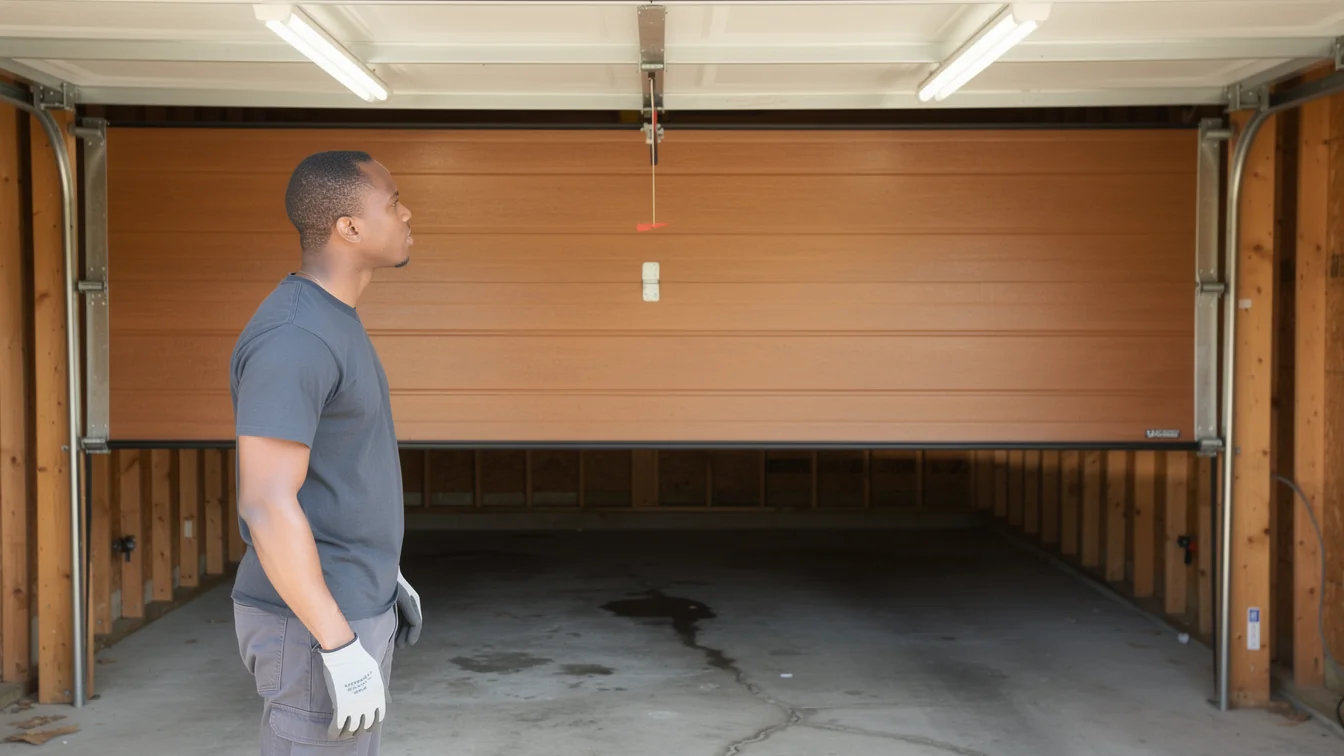
Before you call anyone, a few things are worth a look, and some you can rule in or out from inside the garage. Stand at the door and look down each vertical track - if one side has a visible gap between the track and the wall bracket, or the track itself is bent or dented, that's your off-track point. Check the lag screws at each bracket; on homes from the 1980s and 90s stock common across this area, it's common to find two or three screws backed out a quarter-inch or more.
Next, look at the springs above the door (torsion) or along the top track (extension). A gap in a torsion spring coil, or a stretched, uneven extension spring on one side, points to a balance problem rather than a track problem, though the two often show up together. Don't force the door by hand if it's binding - a door under spring tension that's already off track can drop fast. That's the one limitation worth saying plainly: if the door won't move freely by hand with the opener disconnected, stop and call, because forcing it is how a cable or spring lets go on someone standing underneath.
How we work
Across the neighborhoods in this service area - Guilford Hills, Starmount Forest, New Irving Park, Hewitt Area, Downtown, and out through Summerfield, Jamestown, and the rest of the named towns within 20 miles - the age of the hardware is the common thread, not the address. A track bracket installed in 1987 is the same bracket whether the house sits two miles from downtown or out near Oak Ridge or Stokesdale.
What changes slightly is exposure. Garages on the shadier, tree-lined streets common in the older sections hold cold air longer into the morning, so the stiff-steel, off-track calls in those pockets tend to cluster earlier in the day. Garages facing full sun warm and loosen brackets faster across a season, which shows up more as a slow drift into misalignment than a sudden jump. Either way, the fix starts with the same check: track alignment, bracket screws, and spring balance, in that order, before anything gets replaced.
Questions
Usually it wasn't sudden - a bracket or roller has been working loose for a while, and a cold morning (common in Greensboro's cold-moderate winters) is when the steel is stiffest and least forgiving, so that's when it finally jumps. Check for a loose bracket or visible track gap before assuming something just broke.
Not if the door won't move freely by hand with the opener disconnected. A door under spring tension that's binding on a bent track can drop suddenly. If it moves easily, you may be able to guide a roller back on, but a bent track or a backed-out bracket screw needs a proper fix, not a push.
Yes. Most homes in this area were built between 1968 and 2002, with a lot of that stock from the 1980s and 90s, so original track brackets are decades old. That age is usually why screws have worked loose or a track bracket has shifted, rather than any recent damage to the door itself.
Recommendation
More garage door guides for Greensboro homeowners.
Greensboro homes built mostly between 1968 and 2002 carry original hardware aging out together.
Read more
Greensboro homes built mostly between 1968 and 2002 usually have garage doors worth repairing, not replacing outright.
Read more
Many Greensboro homes went up between 1968 and 2002, before stricter insulation codes.
Read moreReady when you are
Greensboro Garage Door Pros repairs and installs garage doors, springs and openers in Greensboro, NC and the surrounding area.