Cold Snaps and Old Springs: What Greensboro Homeowners Should Know
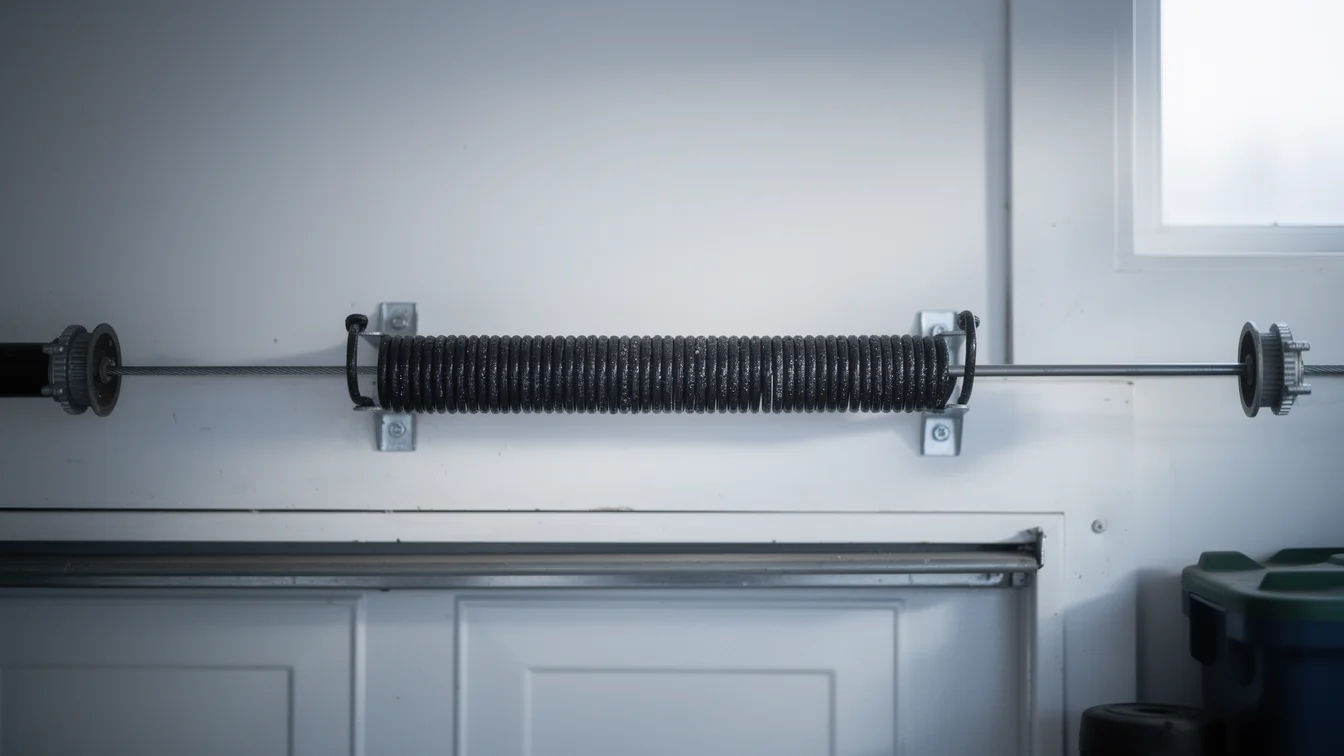
Most Greensboro homes date to the 1980s-90s, and cold-moderate winters strain original torsion springs.
Read moreBlogGreensboro, NC · 5 min read
How Greensboro's 1980s-era housing stock and cold-moderate winters affect garage door openers during power cuts, plus what to check before the next outage.
Local detail
Most houses across this service area went up between 1968 and 2002, with the bulk of the stock dating to the 1980s and 90s across the 19 named communities we work in, from Guilford Hills to Sedalia. That matters for openers because a huge share of those units are original or first-replacement chain-drive models wired straight into the house circuit with no battery backup built in. When the power drops, the opener drops with it, and the door sits wherever it was when the outage hit - often half-open, sometimes fully down with nobody able to get the car out.
Newer openers, the ones with built-in battery backup, didn't become standard equipment until well after most of these houses were wired. So a house built in 1987, which is the median year for this area, is more likely than not running an opener that has no backup unless someone has already swapped it out. That's not a flaw in the house - it's just the age of the equipment matching the age of the neighborhood.
We don't rewire electrical panels or add whole-house generator transfer switches - that's an electrician's job, not ours. What we do is tell you honestly whether your current opener can take a battery backup unit or whether the motor itself is old enough that replacement makes more sense than retrofitting.
The area
This area sits in a cold-moderate climate band, which means winter brings ice storms and the kind of wet, heavy snow that downs lines, more than it brings sustained deep freeze. Power cuts here tend to cluster around winter storm events and the occasional summer thunderstorm line, not prolonged heat-driven grid strain.
In winter, an outage during an ice event is the worst combination for an opener without backup: the door is stuck shut right when you need the car, and the manual release cord becomes the only way in or out until power returns. In summer, outages are usually shorter, but garage temperatures climb fast enough that a stuck-closed door with a car inside is its own problem.
For houses built in the 1980s and 90s, the opener motor itself is often original or on its second replacement by now. Combine an aging motor with a winter ice outage and you get two failures at once - the power cut and a motor that was already marginal. We see both show up together more than people expect.
What we find
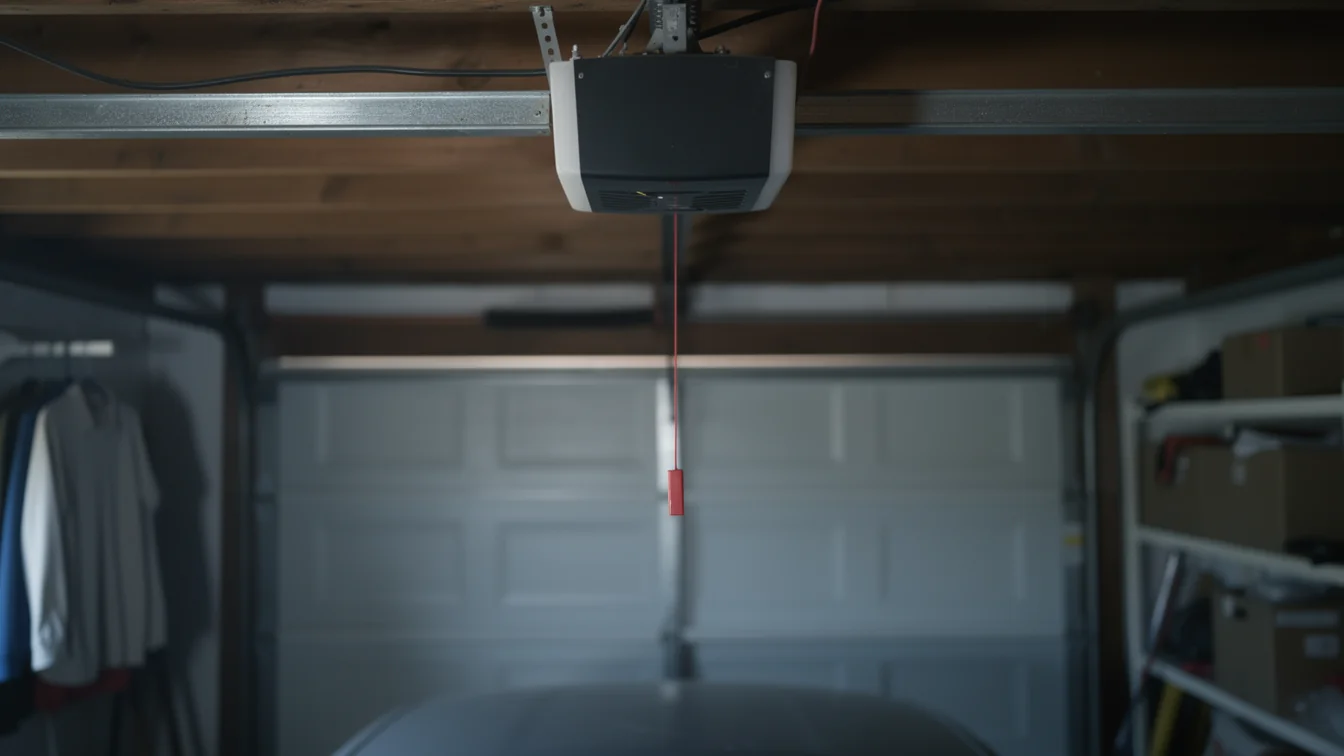
Find your manual release cord now, not during an outage. It's the red handle hanging from the trolley on the rail - pull it and the door disconnects from the opener so you can lift it by hand. If you've never located it, do that before the next storm, not during one.
Check whether your opener has a battery backup unit already installed - it's a small box mounted near the motor head, separate from the main unit. If you don't see one and your house dates to the original 1968-2002 building wave common across this area, there's a decent chance you're running without one.
Test the manual release itself. On older chain-drive units, especially ones original to a 1980s build, the release mechanism can seize from age even if the motor still runs fine day to day. A release that won't move when you need it defeats the whole point of having one.
Look at the door balance too - lift it halfway by hand with the opener disconnected. It should hold roughly in place. If it drops or flies up, that's a spring problem, and no amount of opener backup fixes a door that's already out of balance.
How we work
The age of housing stock across Guilford Hills, Starmount Forest, New Irving Park, Downtown, and the Hewitt Area - the closer-in neighborhoods - tends to run toward the earlier end of the 1968-2002 window, meaning more original hardware still in service. Farther out toward Summerfield, Oak Ridge, and Stokesdale, you'll find a mix of that same era alongside later-90s builds, but the pattern holds: openers installed when the house was built, rarely touched since.
The cold-moderate climate band means ice and wind are the recurring threats to the grid here, not extreme heat or hard freeze. That shapes when outages happen - mostly winter storm season - which is also when you most need the door to open on demand, whether that's getting a car out before roads get bad or getting one in before they do.
None of this means every house needs a new opener. A lot of original units from this era still run fine. What it means is that backup power for the opener isn't something this area's housing stock came with standard, and it's worth checking rather than assuming.
Questions
Only if it has a battery backup unit installed. Most openers original to houses built here between 1968 and 2002 don't have one factory-installed, since backup batteries weren't standard equipment on openers from that era. Check near the motor head for a separate small battery box - if it's not there, the opener has no backup.
Pull the manual release cord - the red handle hanging from the trolley on the rail near the motor. That disconnects the door from the opener so you can lift it by hand. Find and test this before a storm hits, since release mechanisms on older openers can seize if they've never been used.
This area sits in a cold-moderate climate band where ice storms and heavy wet snow are the main grid threats, more than summer heat. Outages cluster around winter storm events, which is also when having a working manual release or battery backup on your opener matters most.
Depends on the opener's age and condition. If the motor is original to a 1980s or 90s build and already showing wear, a backup battery on a tired motor just delays the real fix. If the motor runs well, adding backup can make sense - we can tell you which situation you're in.
Recommendation
More garage door guides for Greensboro homeowners.
Most Greensboro homes date to the 1980s-90s, and cold-moderate winters strain original torsion springs.
Read more
Many Greensboro homes went up between 1968 and 2002, before stricter insulation codes.
Read more
A look at what a Greensboro garage door service call checks, from 1980s-era torsion springs to cold-snap hardware across Guilford Hills to Starmount Forest.
Read moreReady when you are
Greensboro Garage Door Pros repairs and installs garage doors, springs and openers in Greensboro, NC and the surrounding area.