
Frayed cable warning
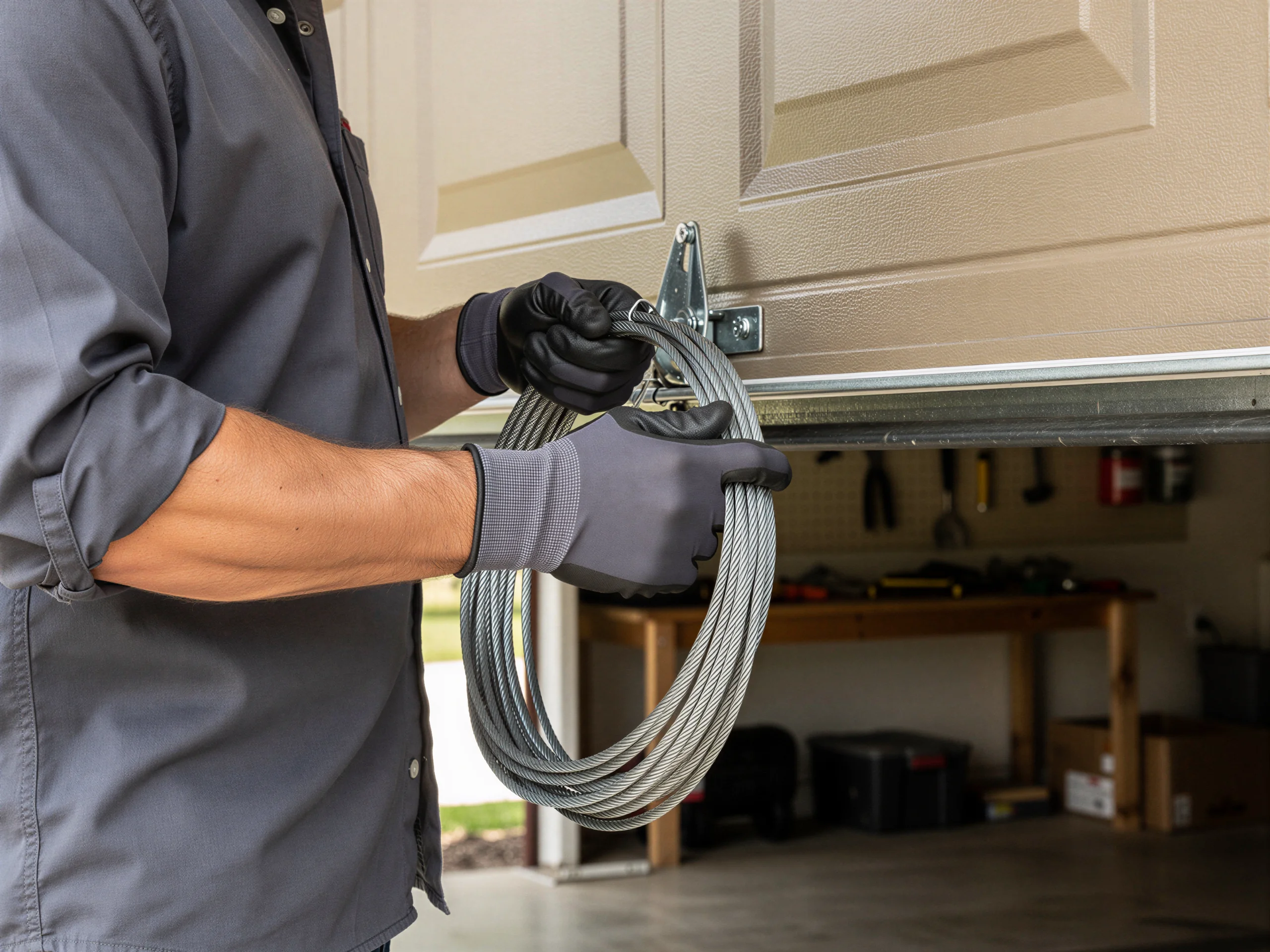
A cable that looks frayed or has started to unwind at the drum end is close behind it; on a door this old, the cable has usually never been replaced and it's just worn through. Rollers are another tell.
Mcleansville, Greensboro
McLeansville homes went up mostly around 1983, so original springs, hinges, and track are now over 40 years old. We drive 9 miles from Greensboro to fix them.
The repair
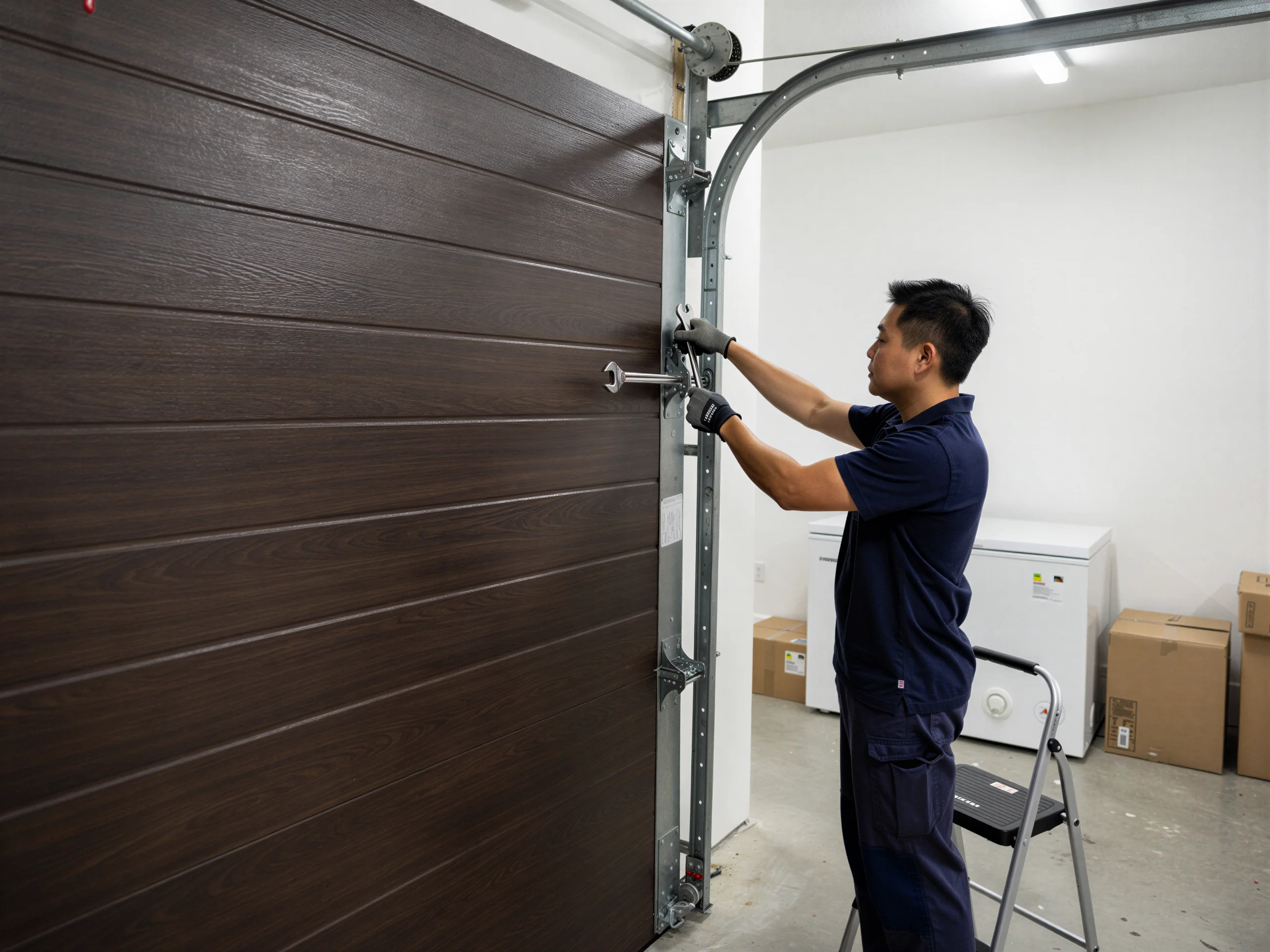
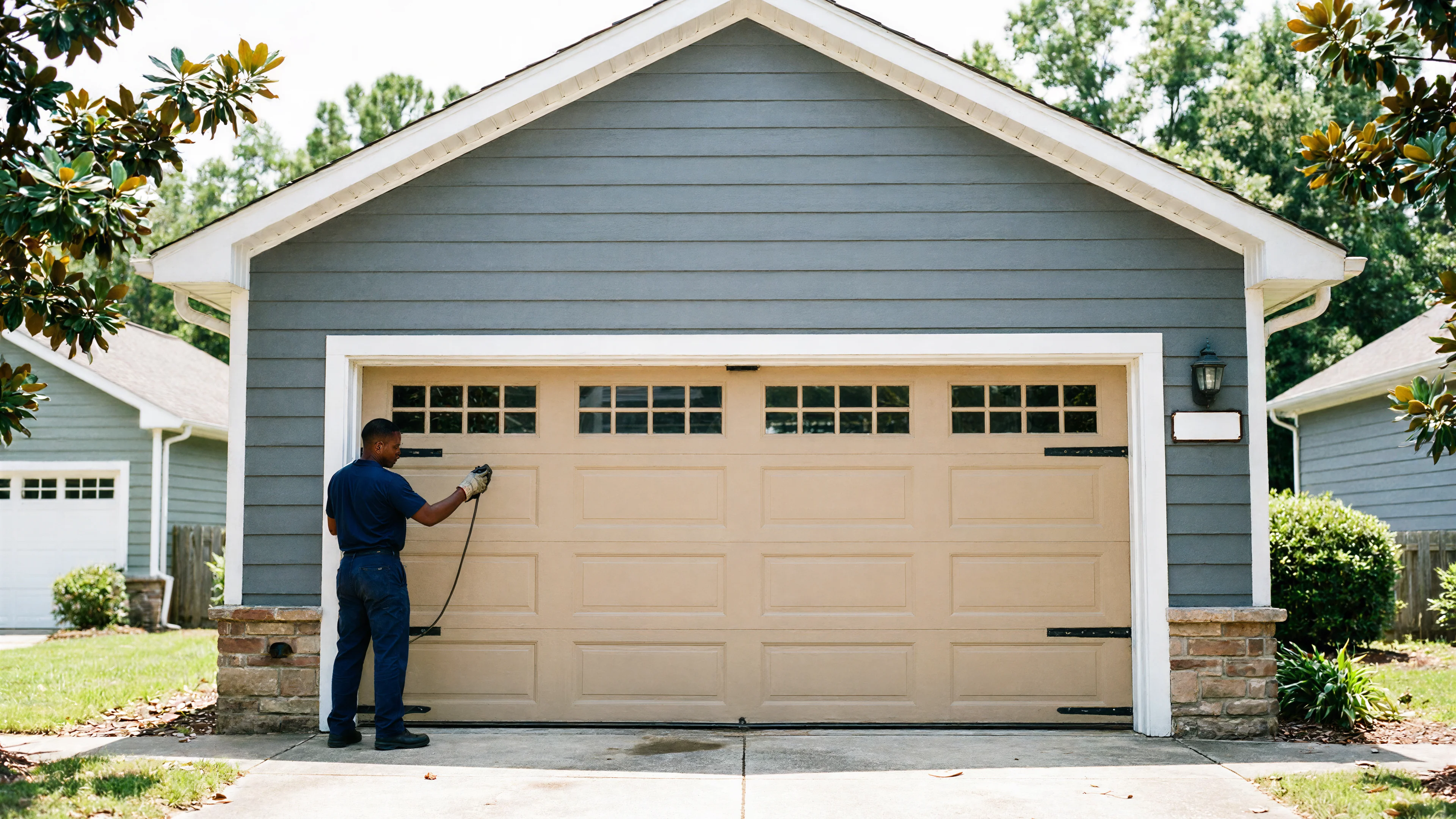
McLeansville sits about 9 miles from our Greensboro shop, and most of the houses we get called to here were built around 1983 - right in the middle of the area's broader 1968-2002 build window, but a few years ahead of the regional median of 1987.
That matters because a door going up in '83 almost never got its torsion spring, hinges, or rollers swapped out along the way. Most homeowners replace the opener once, maybe twice, but the spring and the hardware bolted to the door itself just keep running until something snaps.
So when we get a call from this part of the service area, the fix usually starts with us checking what's original, not just what's broken. A spring that's 40-plus years old doesn't fail cleanly - it fatigues, and by the time it breaks it's often taken a cable or a bent track bracket down with it.
We price the job to match what we actually find, not a flat-rate guess, because a single-spring job and a spring-plus-cable-plus-bracket job are not the same truck call. We don't stock a depot or branch in McLeansville - we run the job from Greensboro, so same-day isn't a promise we can make here, only that we'll tell you honestly when we can get out.
Local causes
The climate band for this part of the state is cold-moderate, which means these doors deal with real winter cold snaps but nothing like the deep-freeze cycling that tears up steel up north. The failure pattern here isn't rust-through - it's fatigue. A torsion spring is rated for a set number of open-close cycles, and a 1983-built door on its original spring has usually burned through that rating a decade or more ago.
The other driver is simple: McLeansville is a small pocket, somewhere around 374 households, which means fewer garage doors total and fewer of them replaced on any kind of regular cycle compared to the denser subdivisions closer to Greensboro. Nobody's going door to door reminding people to swap a spring at the 10,000-cycle mark. It fails when it fails, usually on a cold morning when the steel is stiffest and the extra load finally finds the weak point.
Warning signs
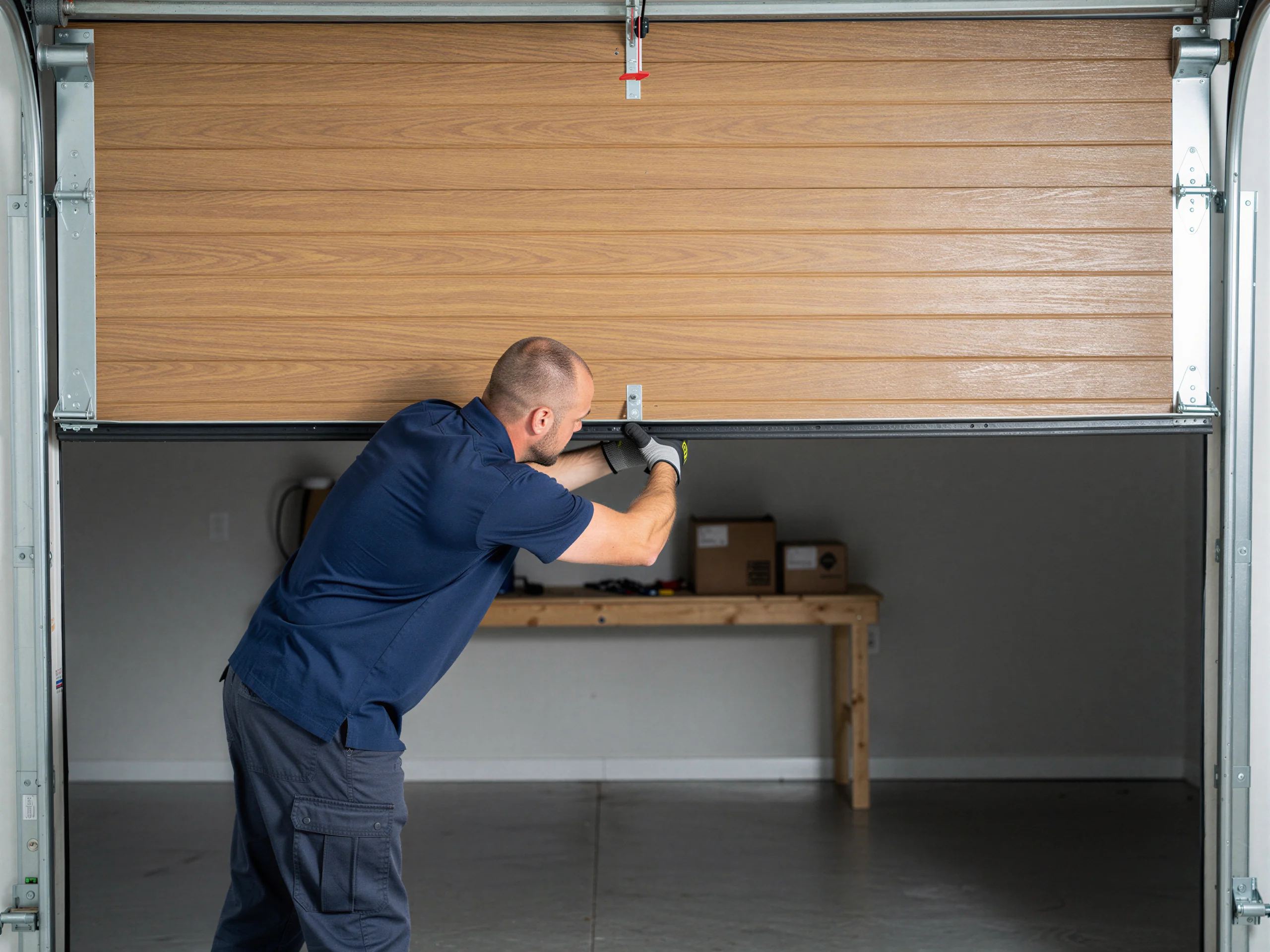
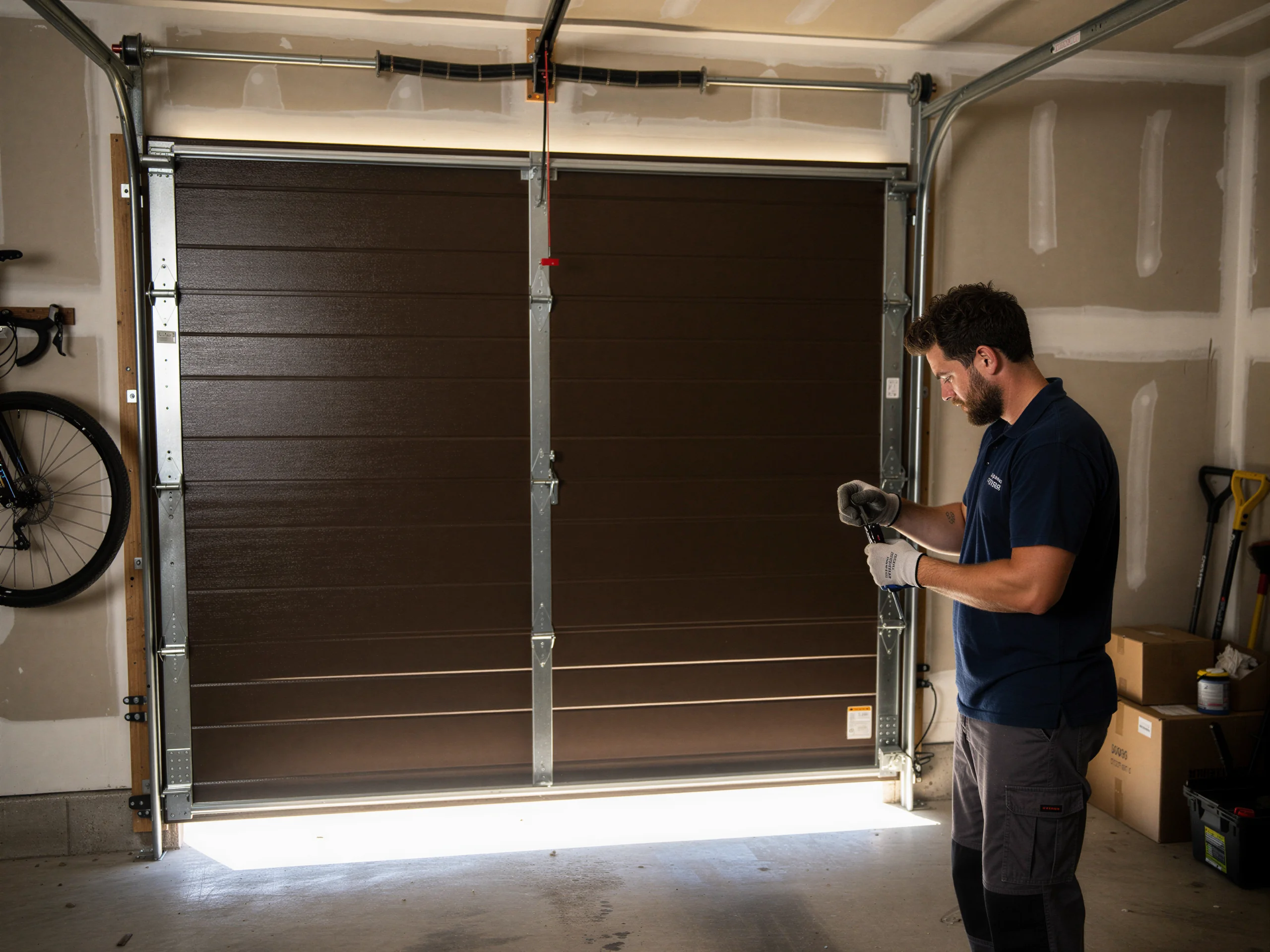
If your door is original to a 1983 build, here's what usually shows up first. A door that's suddenly heavy to lift by hand, or won't stay up without you holding it, is telling you the spring has lost tension - sometimes gradually, sometimes all at once with a bang you'll hear from inside the house.
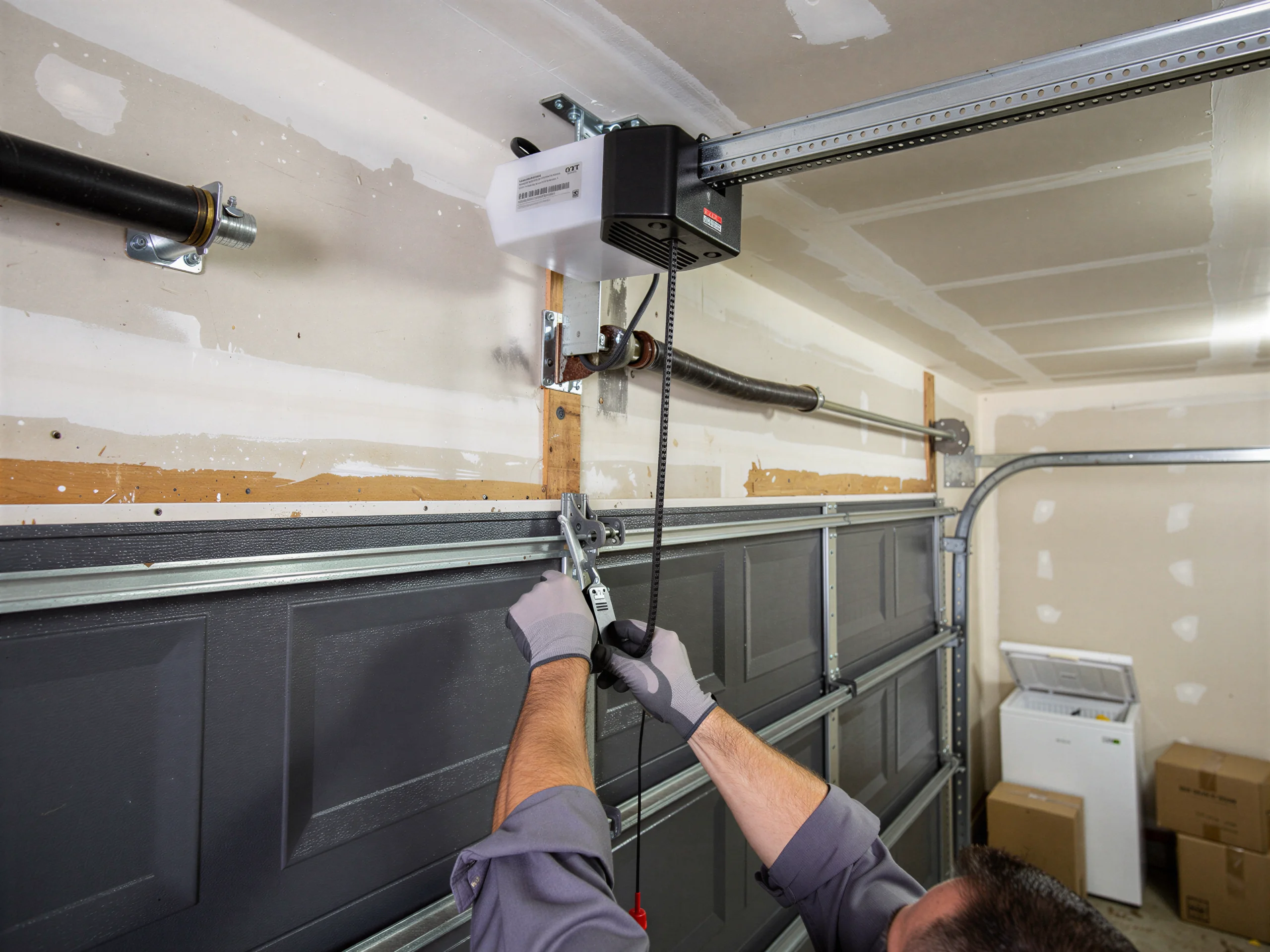
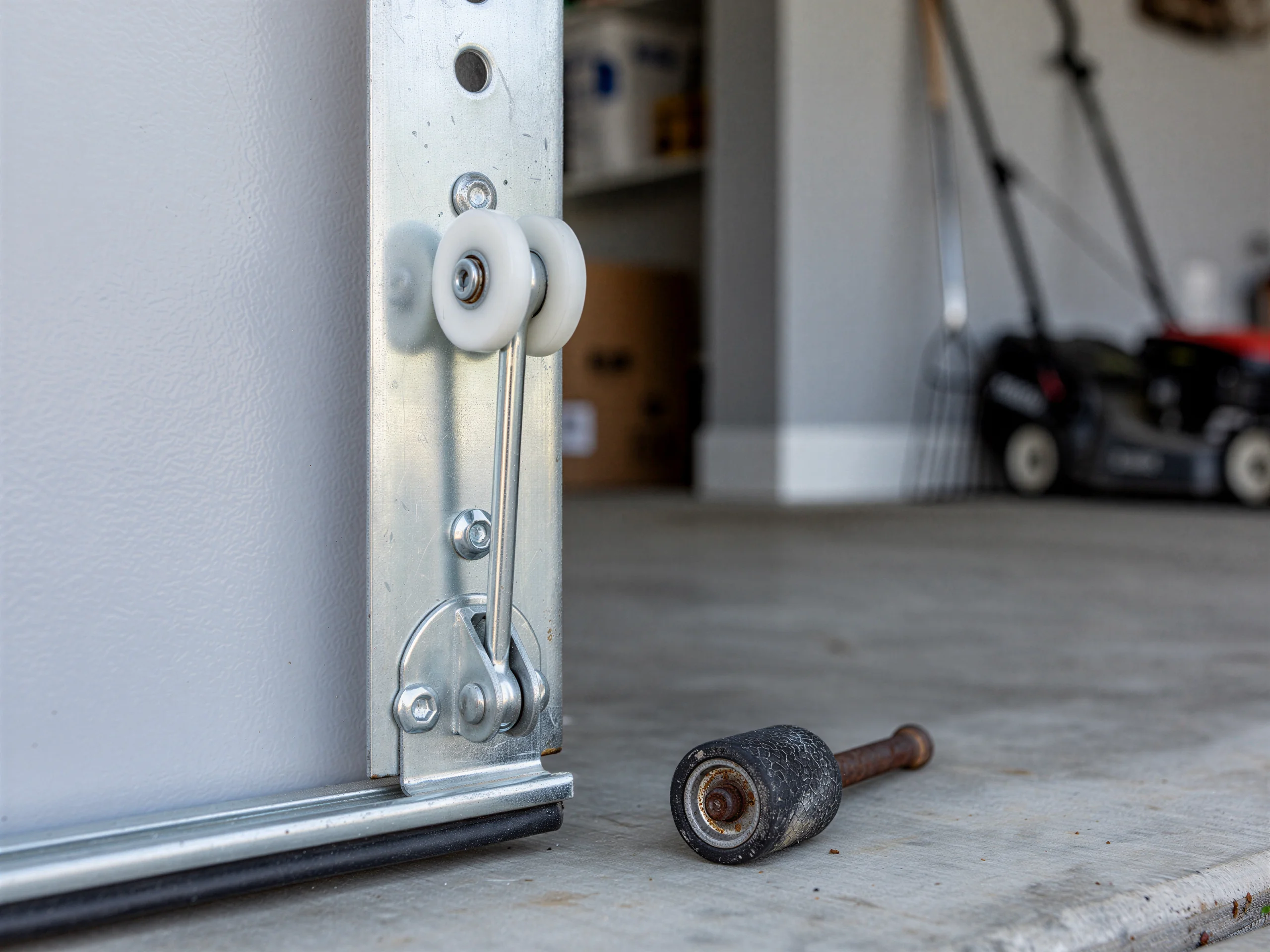
A cable that looks frayed or has started to unwind at the drum end is close behind it; on a door this old, the cable has usually never been replaced and it's just worn through. Rollers are another tell.
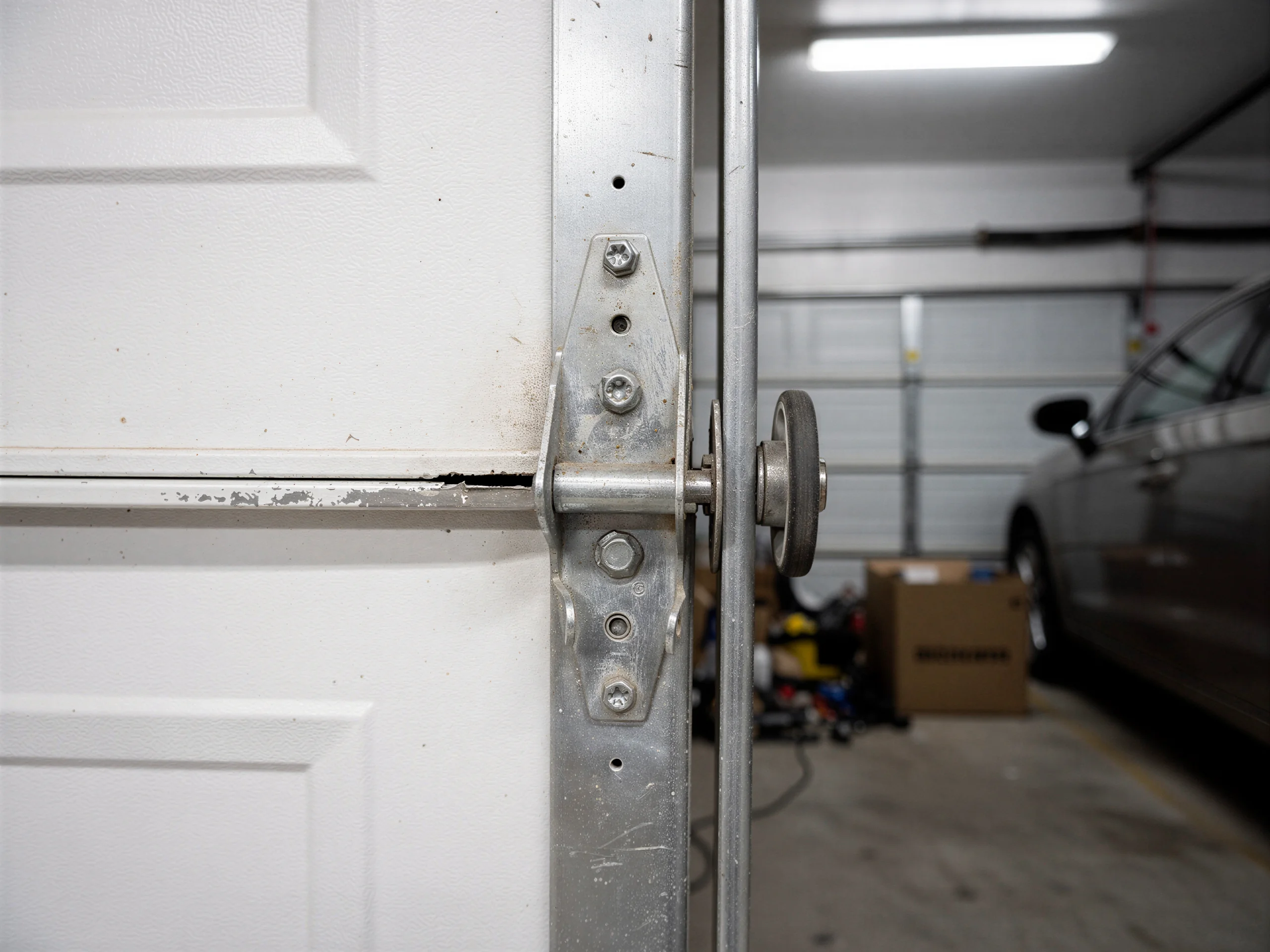
Original steel rollers from the early '80s are loud - a grinding or popping sound as the door travels is often just 40 years of wear on the roller and track, not necessarily anything structural yet.
And on double doors specifically, a center bracket that's started to bow or a track that's pulled away from the wall at one bolt is common once the original hardware has taken that many cycles without any of it being replaced.
On the truck
We carry common torsion springs, standard lift cables, and steel rollers on the truck because they're the parts that fail most on hardware this age, and we don't want a homeowner waiting on a special order for something we see every week.
What we don't keep on hand is anything sized for an unusual or discontinued door - if your panel or track is a size nobody's made in years, that part has to be ordered, and we'll tell you the lead time up front rather than guess.
One honest limit: if the opener, spring, track, and panels are all original and all near the end of their life at once, replacing the door is usually the better call than patching each piece as it fails.
We'll say so if that's what we find, rather than running up a repair bill on a door that's going to need the next part in six months anyway.
Questions
Likely yes. Most homes in this part of the service area went up around 1983, and garage door springs and cables from that era were rarely swapped unless something broke. If you've never had a repair done, assume the spring, cables, and rollers are original and past their rated cycle count.
No. We run out of our Greensboro shop, about 9 miles away, and drive out for every job. We won't promise a same-day window here the way a local depot might - we'll give you an honest arrival estimate when you call.
Torsion springs are rated for a set number of open-close cycles, not a calendar age. On a door built around 1983 that's never had the spring replaced, you've likely gone well past that rating, so it fails all at once rather than gradually losing strength.
Often yes. If the track itself hasn't bent or pulled away from the wall, swapping the original steel rollers for new ones usually quiets the door down and solves the grinding noise without touching the track.
Explore more
Ready when you are
Greensboro Garage Door Pros repairs and installs garage doors, springs and openers in Greensboro, NC and the surrounding area.