
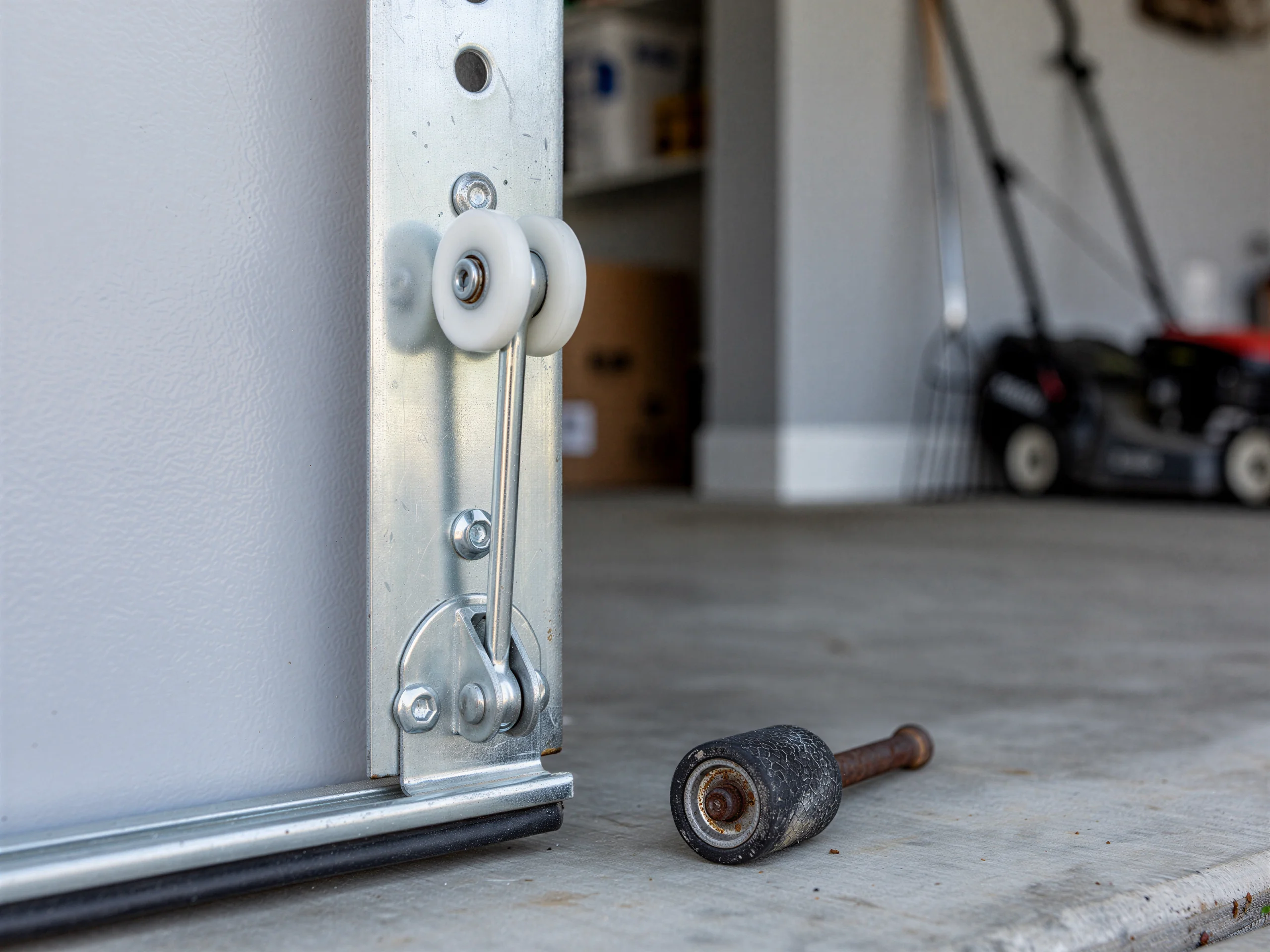
Worn rollers rattling
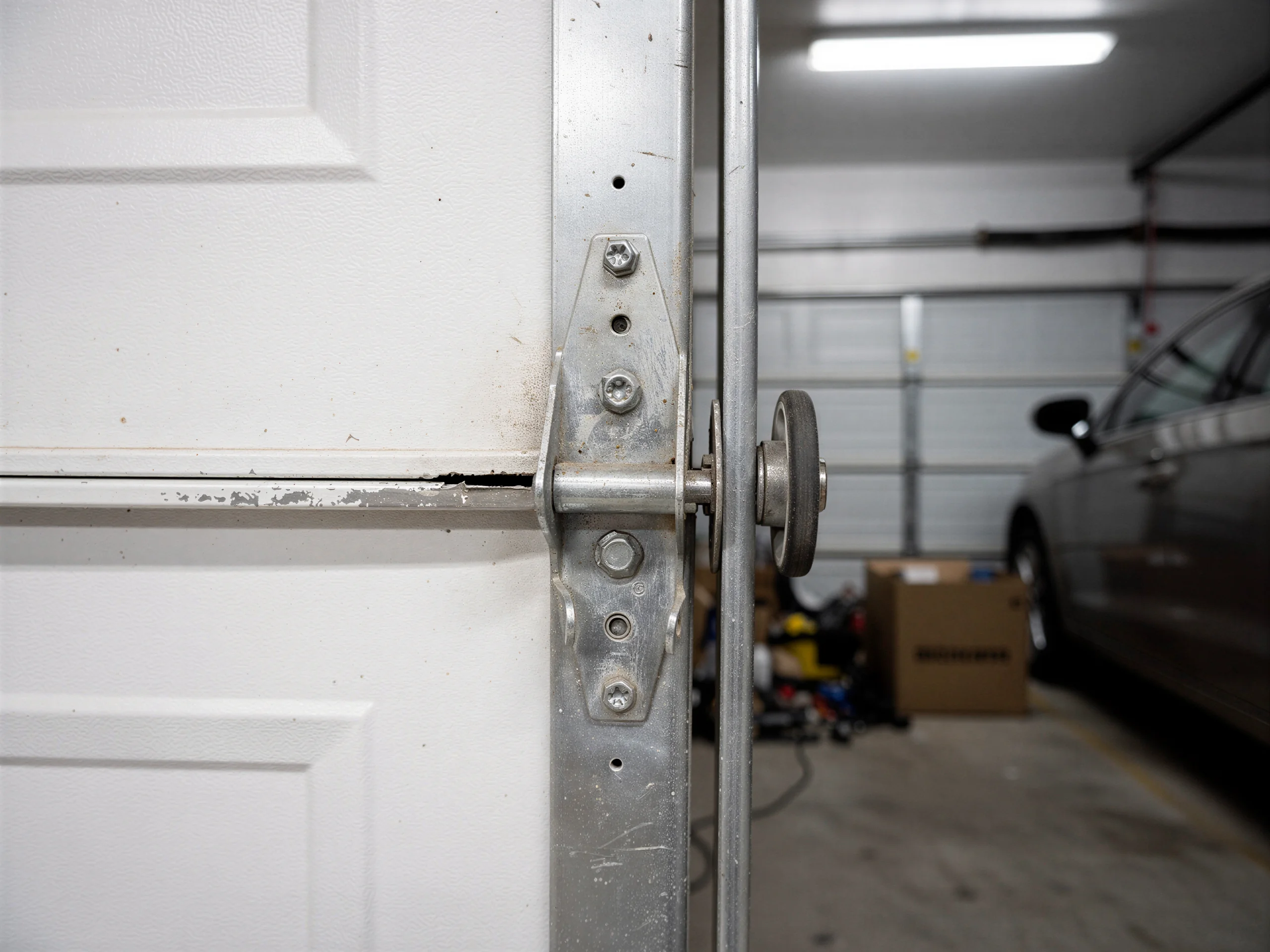
Worn rollers show up as a grinding or rattling noise as the door moves, especially at the top of the track where the curve puts the most load on an aging roller stem.
Mcleansville, Greensboro
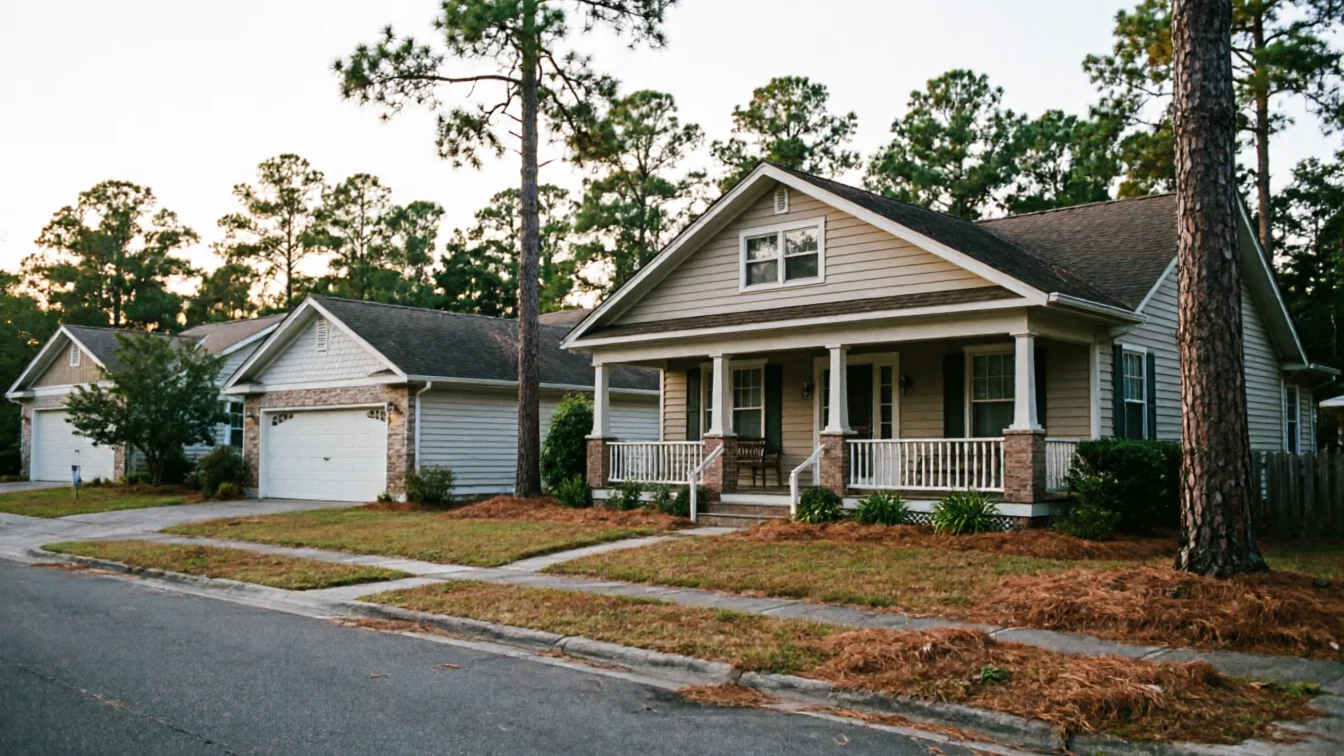
Most McLeansville garage doors date to the early 1980s - steel panel, standard torsion springs, no insulation layer. We come from Greensboro, 9 miles out, with the parts these doors actually need.
The repair
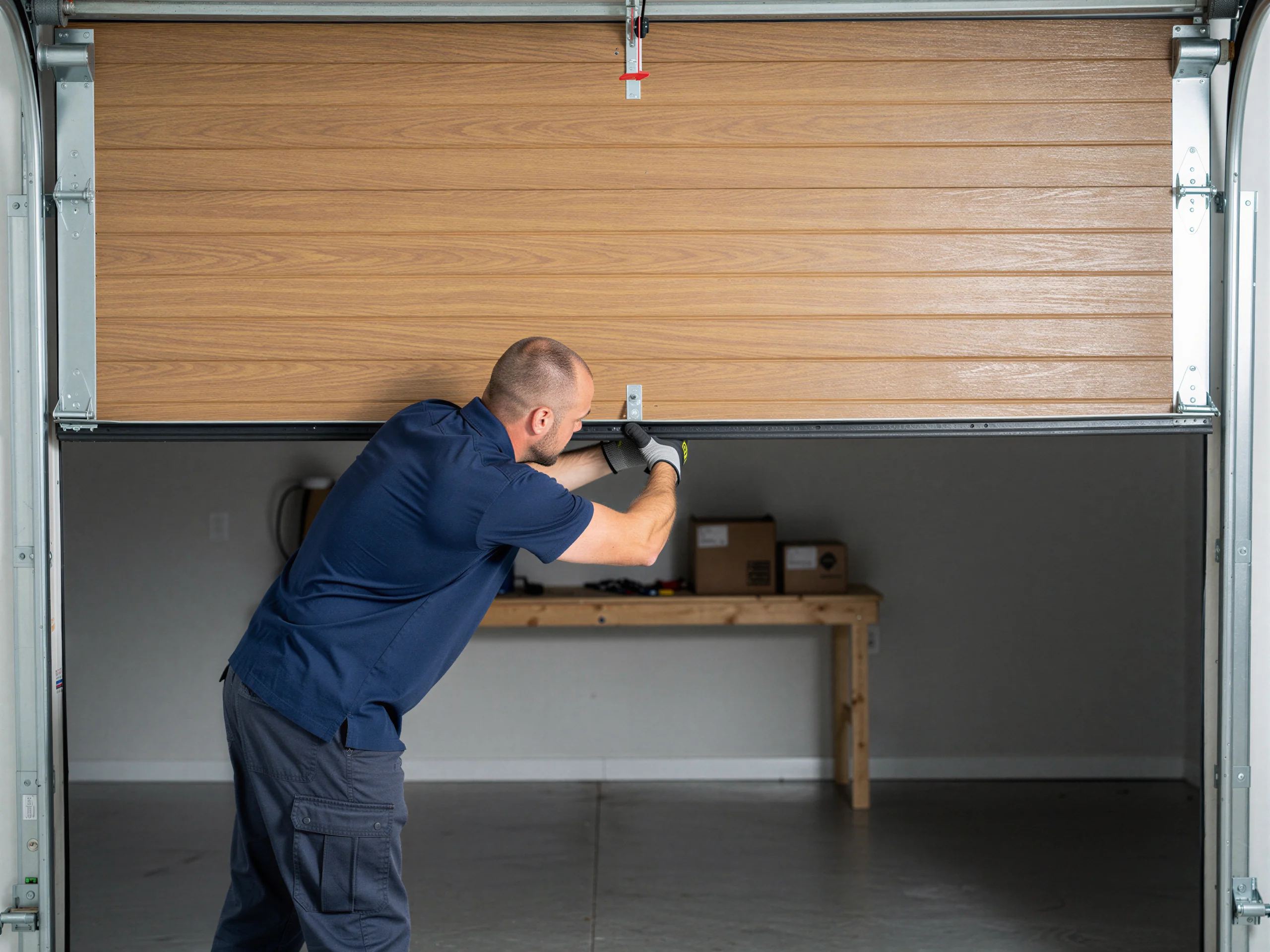
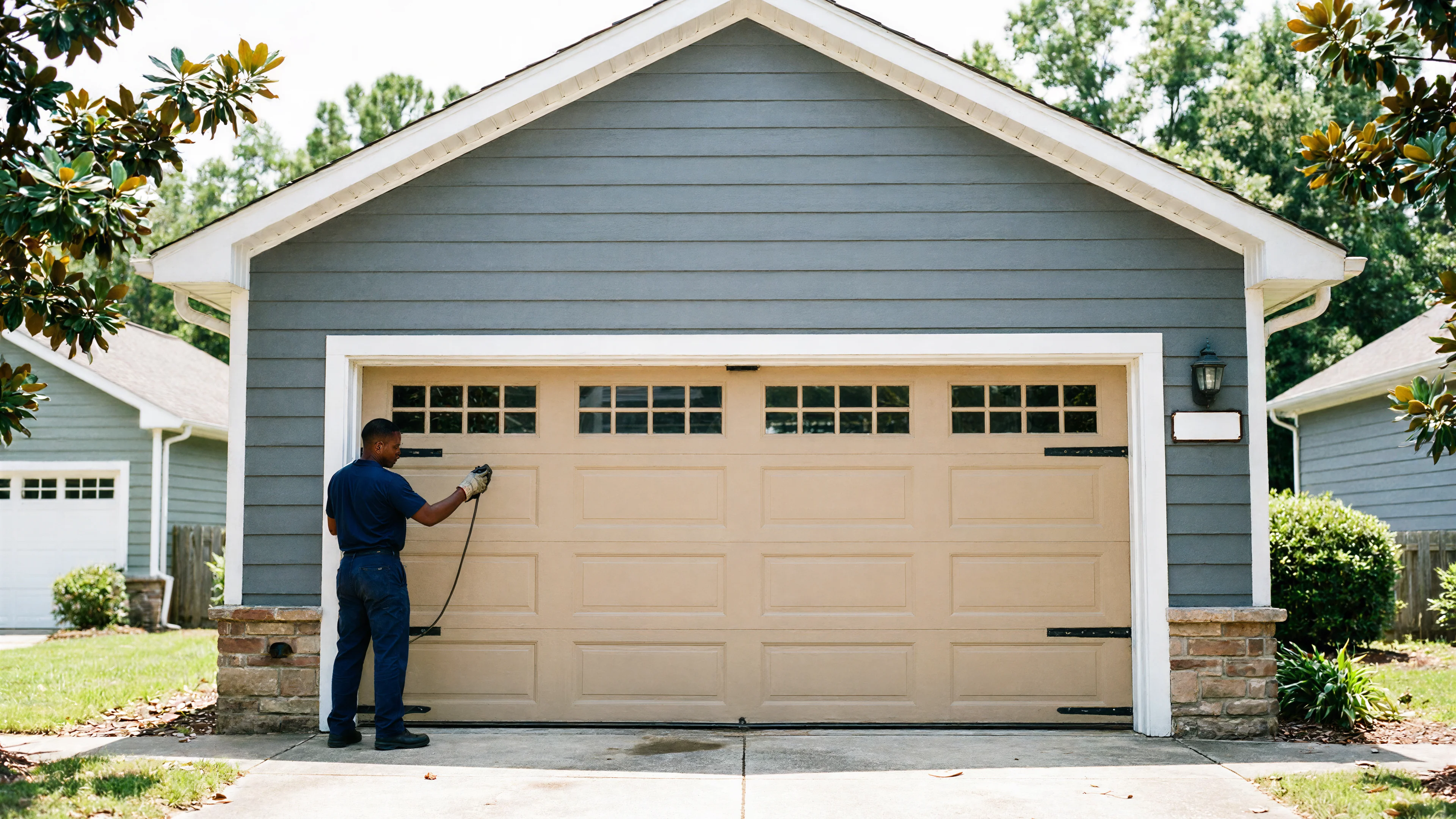
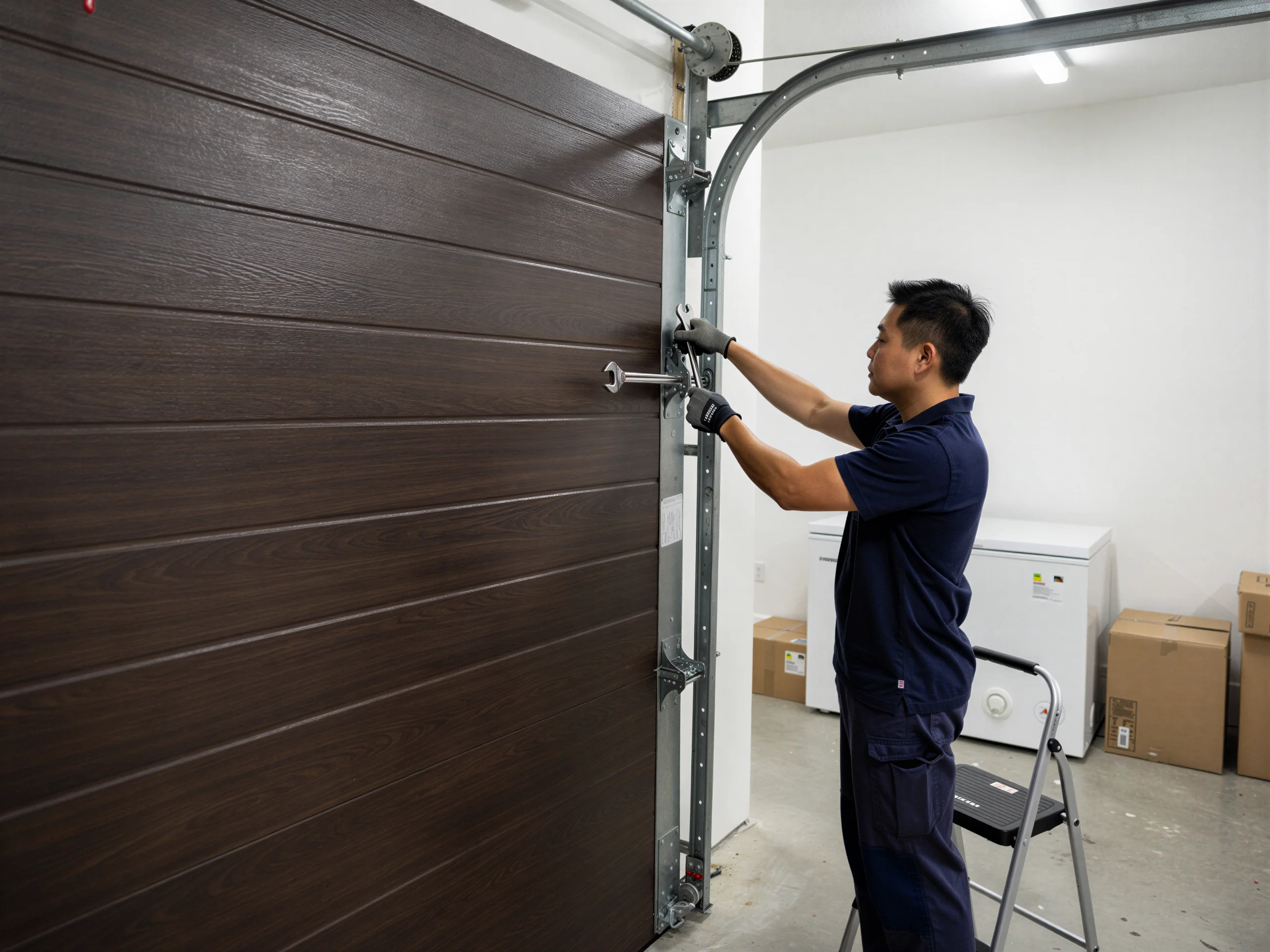
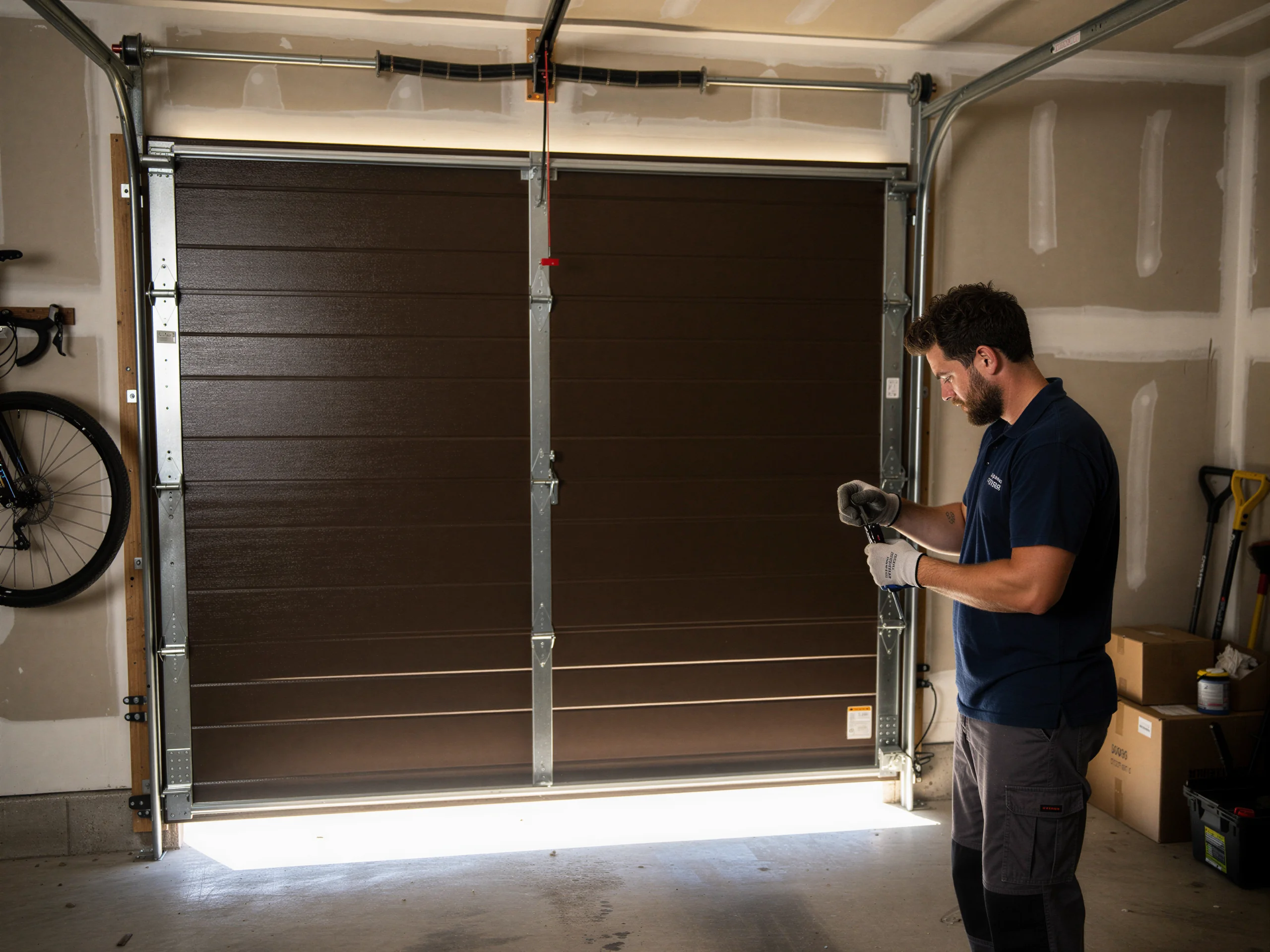
Walk up to a garage in McLeansville built around 1983 and you're almost always looking at the same door: a single-layer steel panel, either a 16x7 double or a 9x7 single, hung on a standard torsion spring set mounted above the opening.
No foam core, no second skin of steel - just a stamped panel bolted to hinges and rollers that have been doing the same job for about four decades.
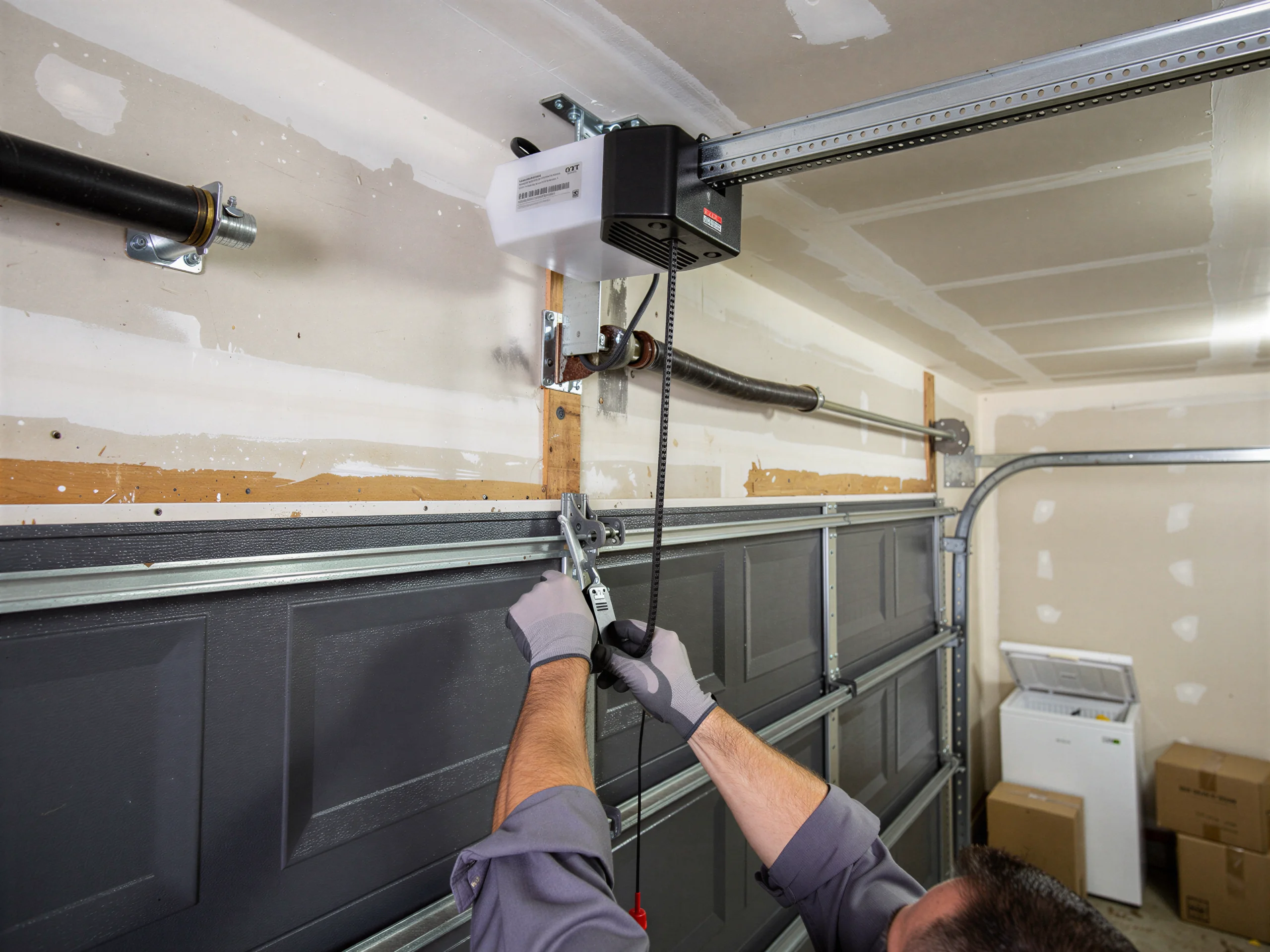
The fix on a door like this usually isn't about the panel itself, which tends to outlast everything bolted to it. It's the galvanized torsion spring, the stamped steel rollers wearing their stems thin, and the hinges stretching their mounting holes into ovals.
We come out from Greensboro, about 9 miles, and the work is straightforward once we're there: spring swap, roller swap, sometimes a full hinge set, and a check on the track alignment since 40 years of settling rarely leaves it dead straight. We don't carry a depot or branch in McLeansville - every job is a truck run from Greensboro, which we factor into scheduling rather than promise around.
Local causes
The housing stock across this part of the service area runs 1968 to 2002, with a median build year of 1987 - McLeansville sits a bit earlier than that, right around 1983, which puts its doors and hardware on the older end of that range. That matters because torsion springs are rated by cycle count, not by calendar year, and a spring installed when a house was built in the early '80s has had roughly ten more years of lifts and lowers than one in a newer subdivision nearby. Add the climate: this is a cold-moderate zone, with real winter swings that stiffen lubricant and make steel contract. A spring near the end of its cycle life that also has to fight cold-stiffened grease on a January morning is a spring that's going to let go. We see more of that failure pattern on the older end of the build range - which is most of what's around McLeansville - than on the newer stock closer to Greensboro's center.
Warning signs
If your door is from this era, the signs usually show up the same way. A spring going bad sounds like a loud bang from the garage, followed by a door that won't lift, or lifts and then slams down because the spring isn't holding its weight anymore.
Worn rollers show up as a grinding or rattling noise as the door moves, especially at the top of the track where the curve puts the most load on an aging roller stem.
Stretched hinges show up as a visible wobble in the panel itself, or a door that looks like it's racking - one side lifting ahead of the other.
None of these are urgent until they are: a spring that's audibly straining but still working is a job you can schedule, a door that's stuck halfway up with cables slack is not something to force by hand.
On the truck
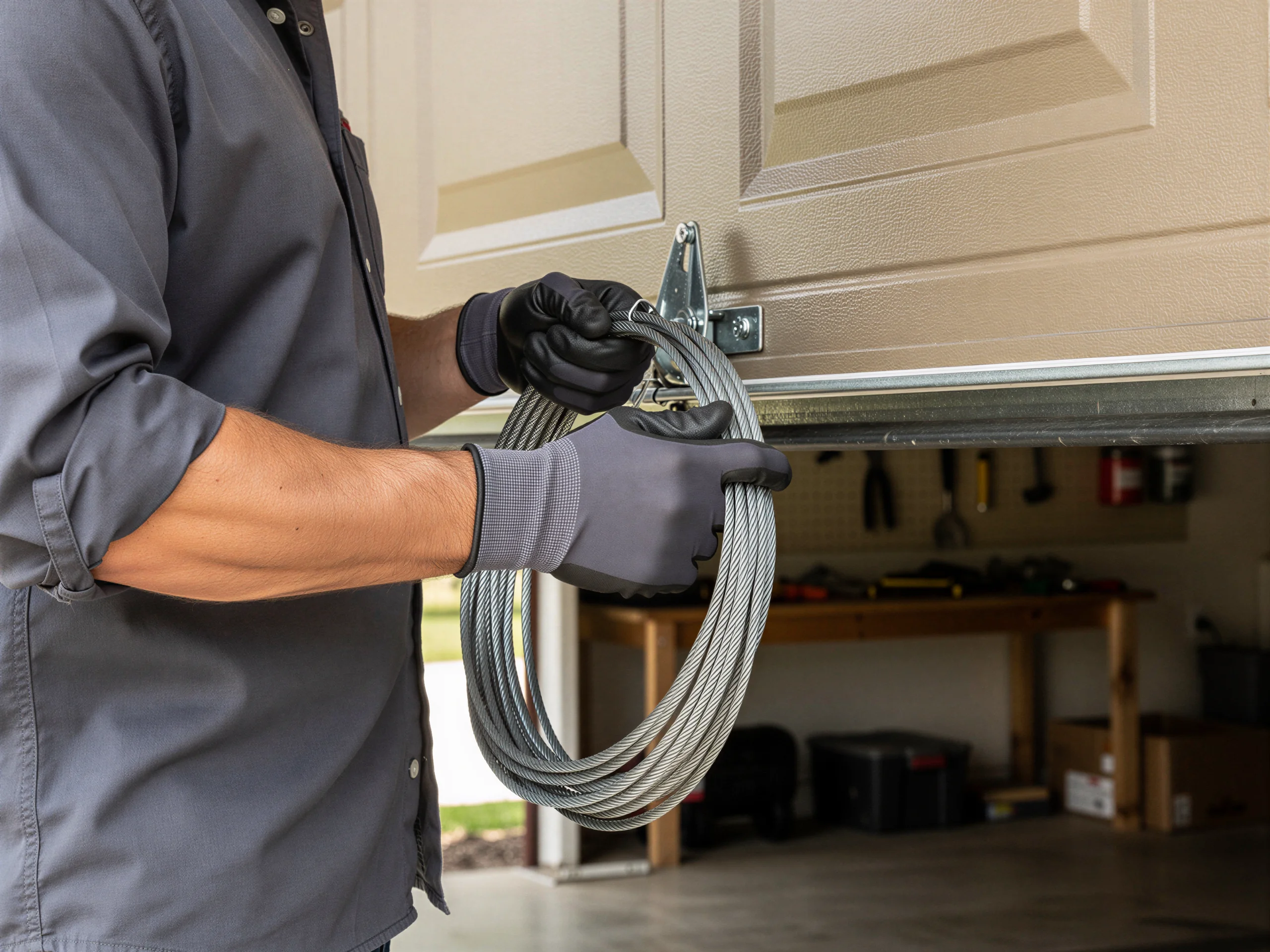
We stock the torsion springs, rollers, and hinge hardware sized for the doors built in this stretch of the service area - 1968 through 2002 stock, median 1987 - because that's the overwhelming majority of what we're called out to work on. What we don't keep on the truck is anything custom: odd-width openings, discontinued panel styles, or opener boards for units old enough that the manufacturer's stopped making replacement circuit boards. On a door from 1983, panel replacement to match an existing design sometimes isn't possible at all, and we'll say so rather than quote a job we can't actually complete. For 374 households in McLeansville, most of what comes up is spring, roller, and hinge work on steel doors from the same two-decade build window - not a parts problem, a wear problem.
Questions
Most houses here were built around 1983, which puts original garage doors and their hardware on the older end of the service area's 1968-2002 housing range. That means more worn torsion springs, stretched hinges, and aging rollers than you'd see in newer construction closer to Greensboro.
No. We run out of Greensboro, about 9 miles away, and every McLeansville call is a truck trip from there. We don't promise a response time tied to a local depot because we don't have one - we schedule the drive into the job.
Sometimes, sometimes not. A single-layer steel panel from the early 1980s may no longer be manufactured in a matching style, and we'll tell you plainly if a repair panel can't be sourced to match rather than guess and order something that doesn't fit the rest of the door.
Torsion springs fail by cycle count, not age on a calendar, and a spring from a 1983-era install has usually logged more open-close cycles than a newer one nearby. Cold-moderate winters here stiffen the lubricant too, which adds strain right when the spring is already near the end of its life.
Explore more
Ready when you are
Greensboro Garage Door Pros repairs and installs garage doors, springs and openers in Greensboro, NC and the surrounding area.