
Schedule-based arrival windows
A truck comes from town, which means a same-day window depends on what's already on the schedule that morning, not on proximity. Once we're on site, the work itself usually moves fast.
Pleasant Garden, Greensboro
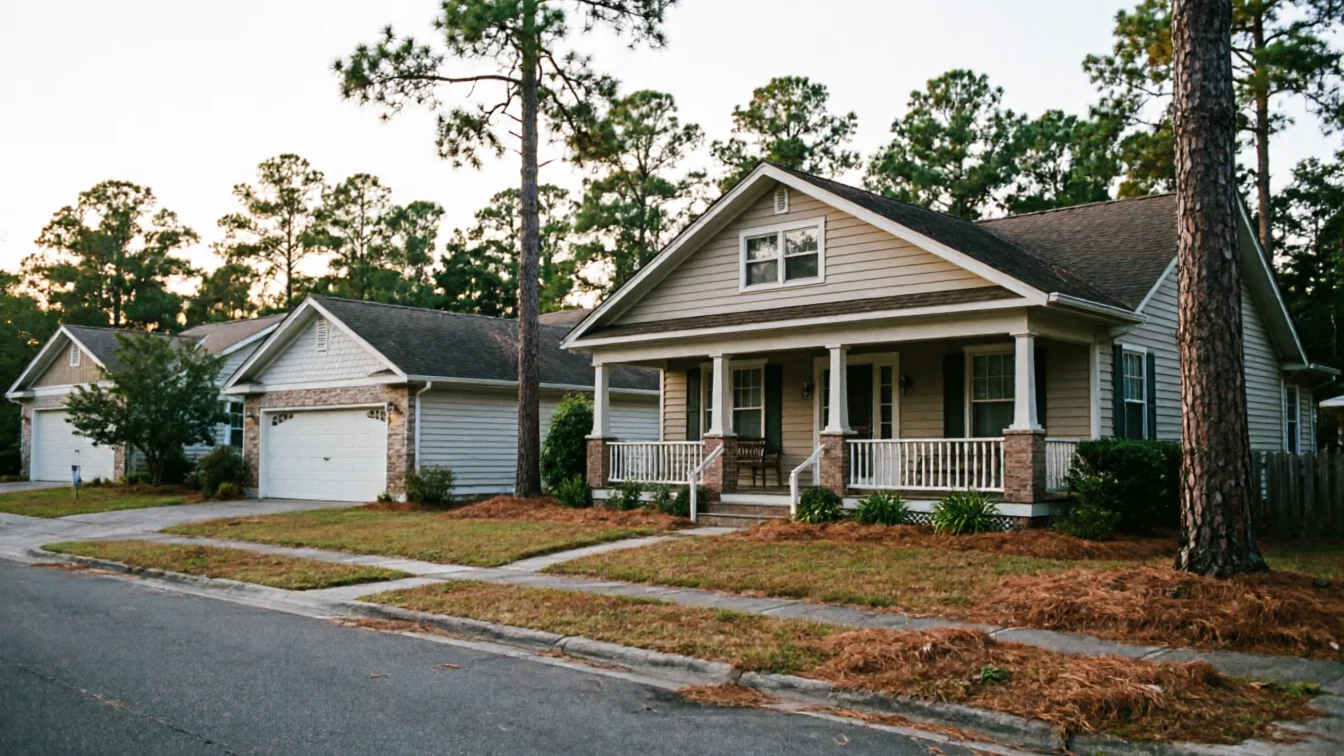
Pleasant Garden's typical house dates to 1979, eight years ahead of the metro median. That gap changes which springs, tracks, and openers fail first. We travel from Greensboro to fix them.
Timing
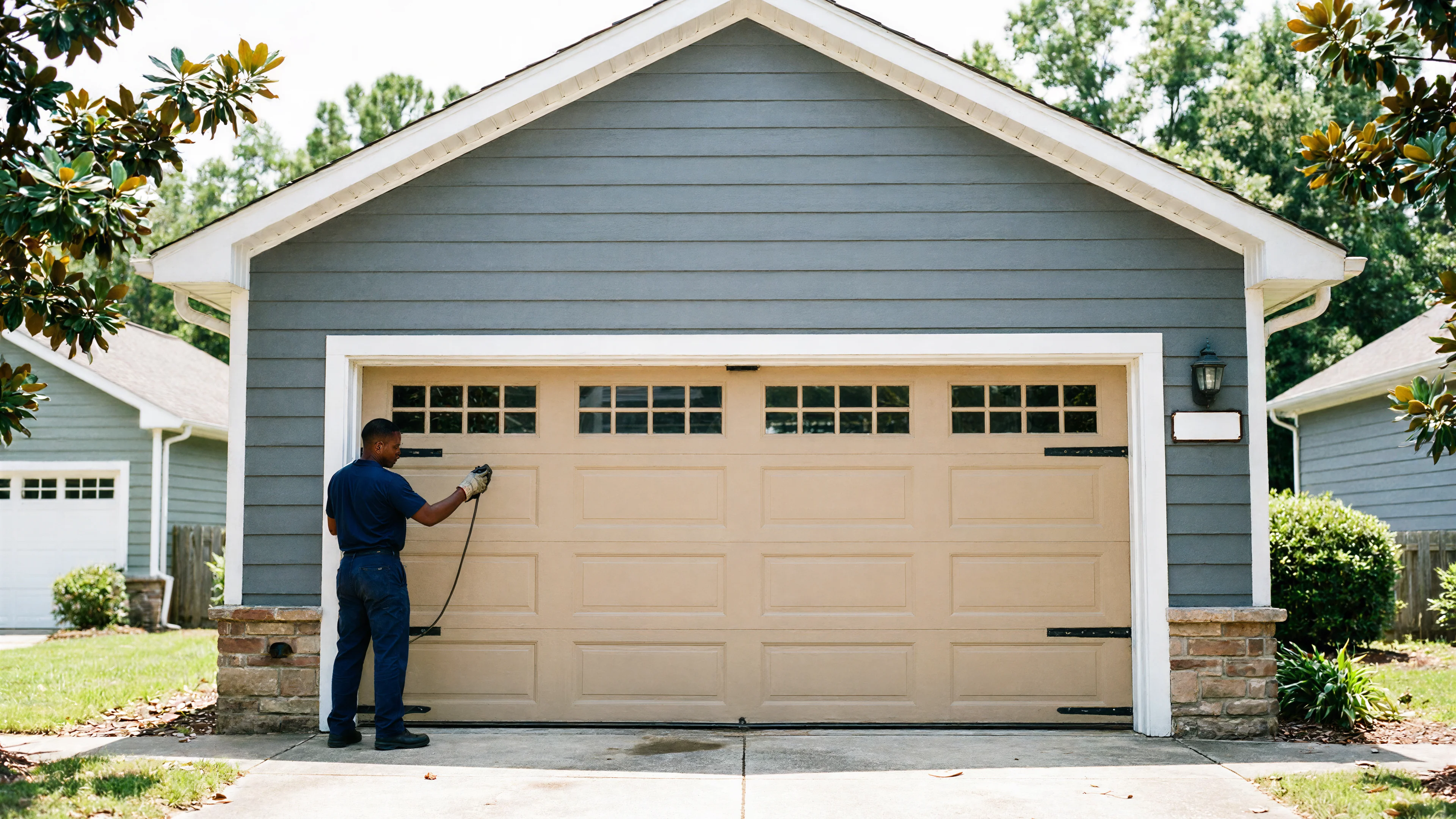
We run this call from Greensboro, 11 miles out, so the first thing to know is that nobody is sitting in Pleasant Garden waiting on a job to come in.
A truck comes from town, which means a same-day window depends on what's already on the schedule that morning, not on proximity. Once we're on site, the work itself usually moves fast.
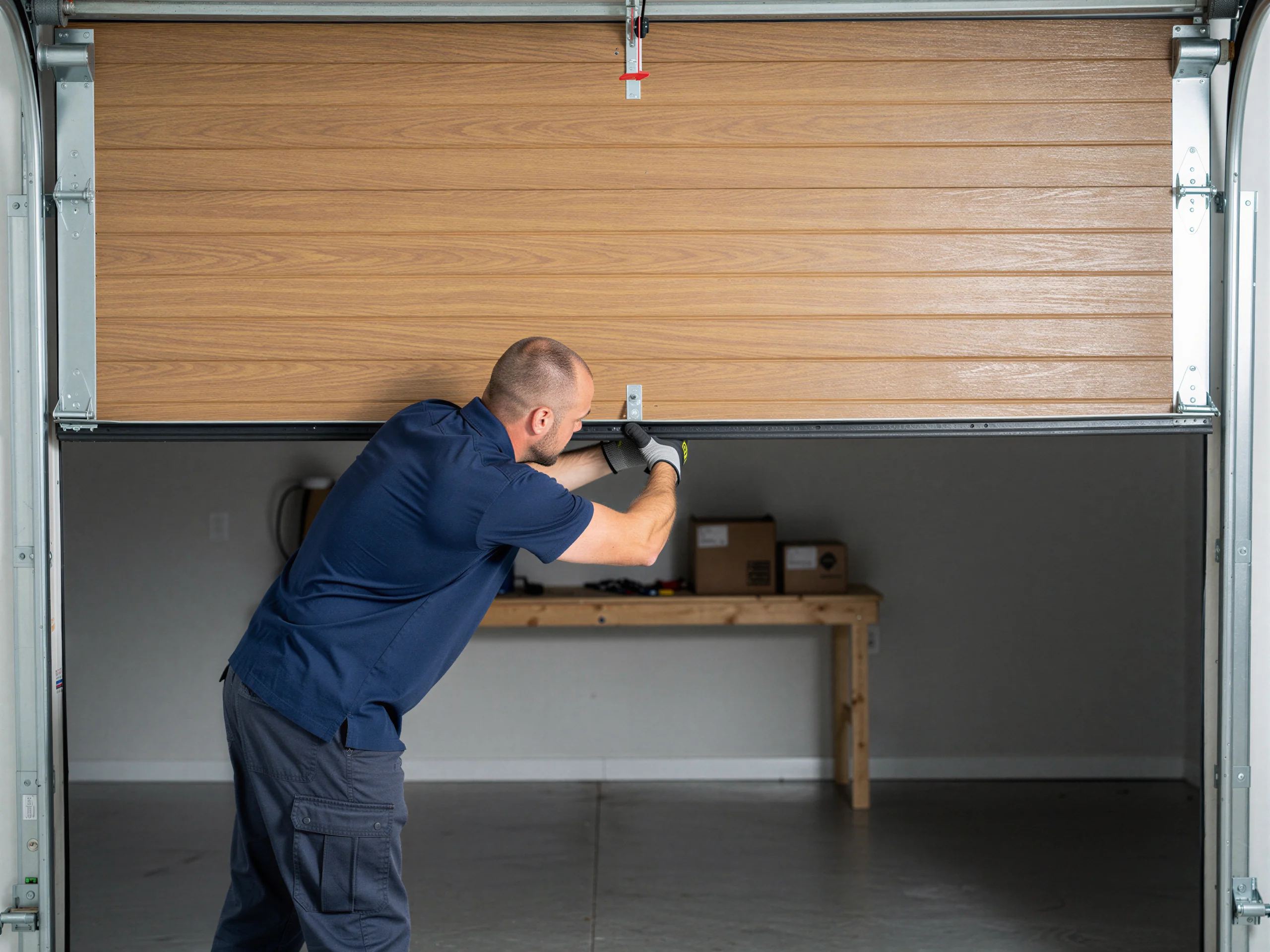
A broken torsion spring on a single door is typically a one-hour job once we've confirmed the spring size and drum setup. Openers take longer if wiring or wall control needs replacing too.
What we won't do is quote you a fixed arrival time before we've seen the day's route - that's a promise we can't back with facts, so we don't make it. What we can tell you is that most of the repair calls out here are mechanical, not electrical, and mechanical jobs tend to run shorter than people expect.
Local causes
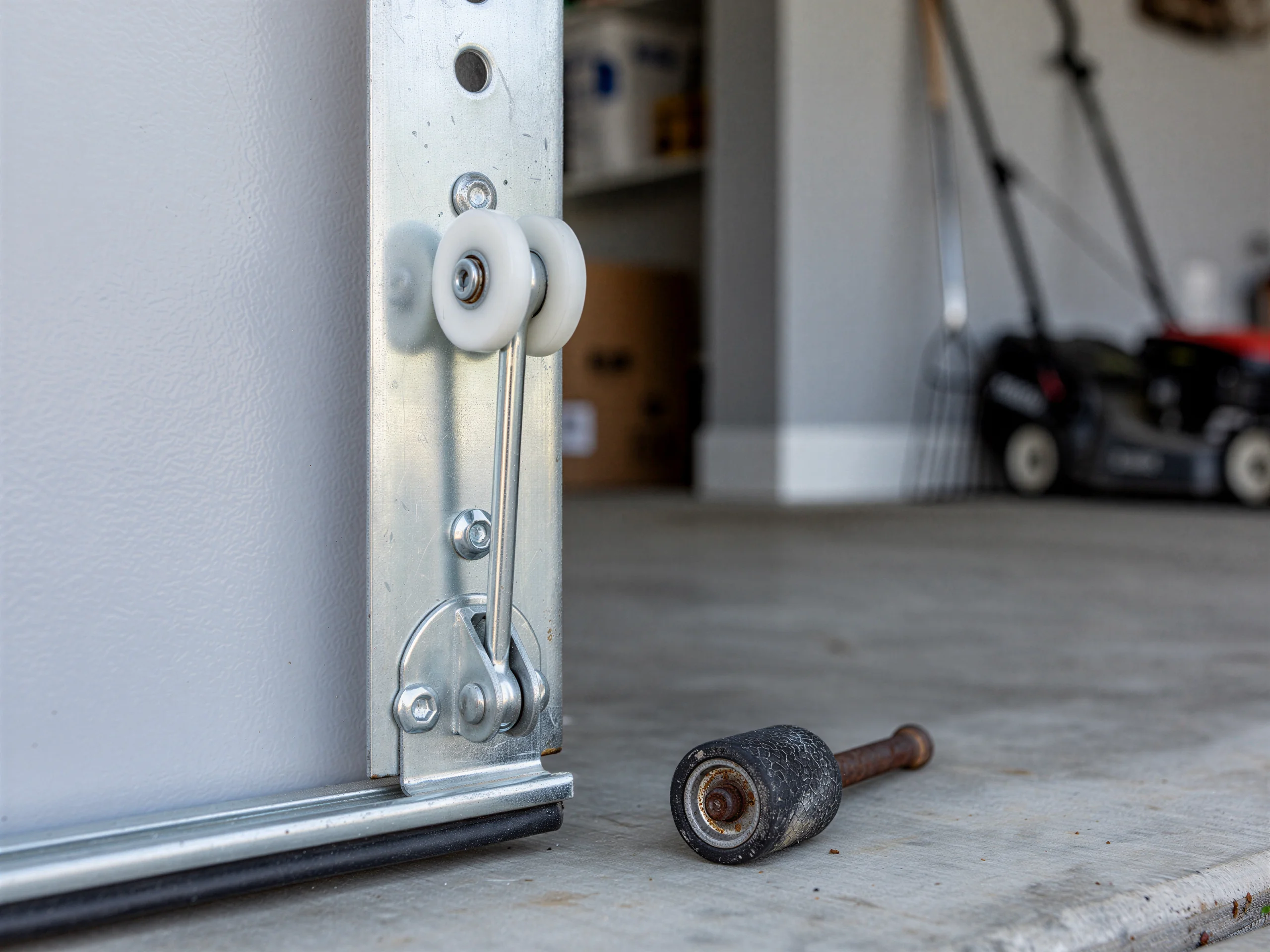
The median house in Pleasant Garden was built around 1979 - earlier than the 1987 median across the wider Greensboro service area, and earlier than most of the 1980s-90s stock that makes up the bulk of the 19 named communities we cover. That eight-year gap matters because garage door hardware from the late 1970s often means older torsion spring setups, heavier steel sections, and openers that have already been swapped out once or twice over four decades. Springs on a door this age have usually hit the end of their cycle count whether or not the homeowner has noticed slow sag or a door that won't stay up. Cold-climate swings (the area sits in a moderate cold band) also stress steel tracks and nylon rollers on housing this old faster than they would on a door installed in the 2000s. The combination - older original hardware plus seasonal temperature swing - is the single biggest reason we get spring and roller calls out of this part of the service area.
DIY or pro
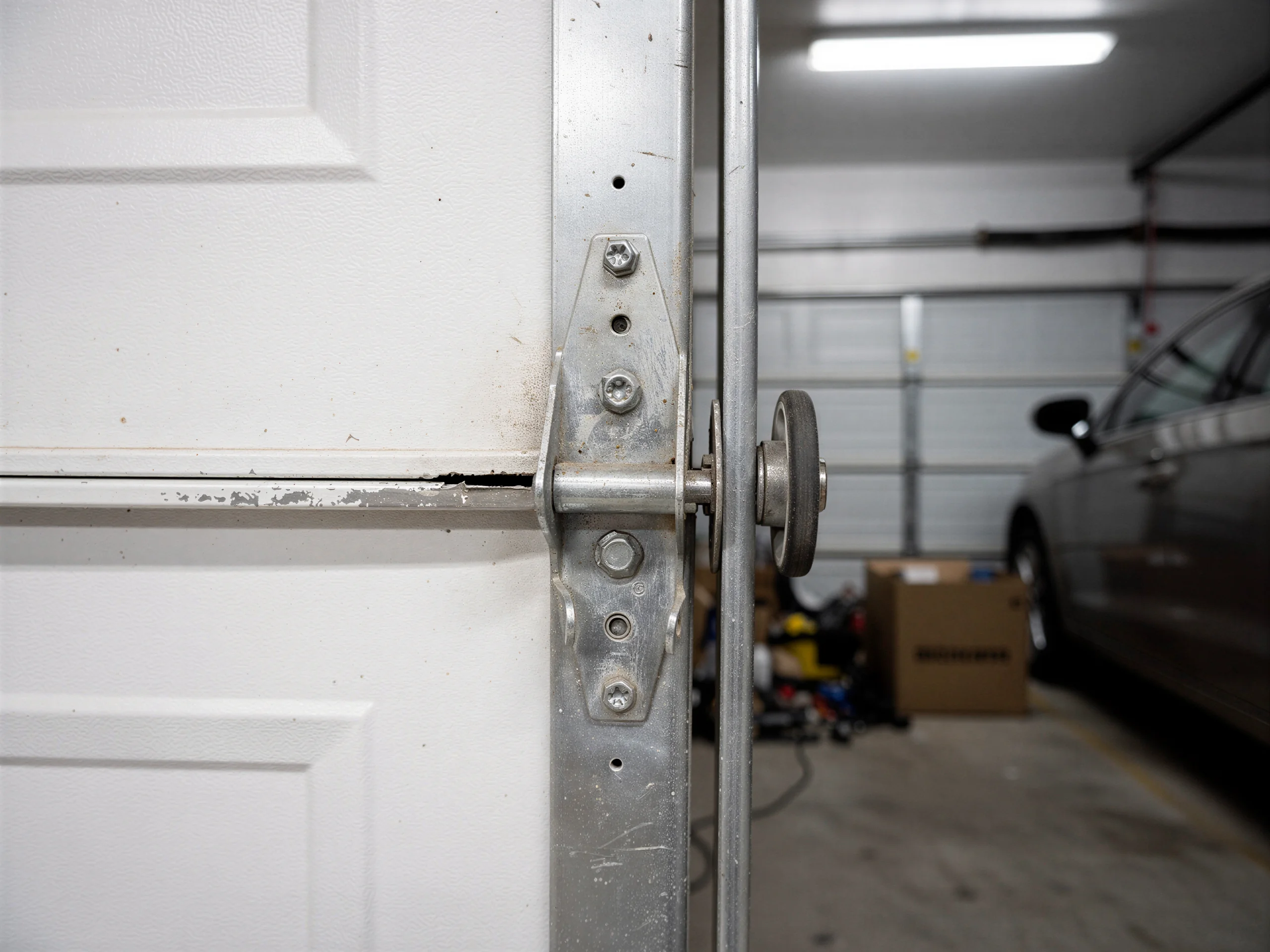
If your door is sagging on one side or the opener is straining and reversing, you can usually tell within a few minutes whether it's a spring problem or a track problem - a bent track shows visibly, a dead spring does not.
Checking balance is safe: disconnect the opener, lift the door by hand halfway, and see if it holds. If it drops or shoots up, that's spring tension, and that's not a DIY repair.
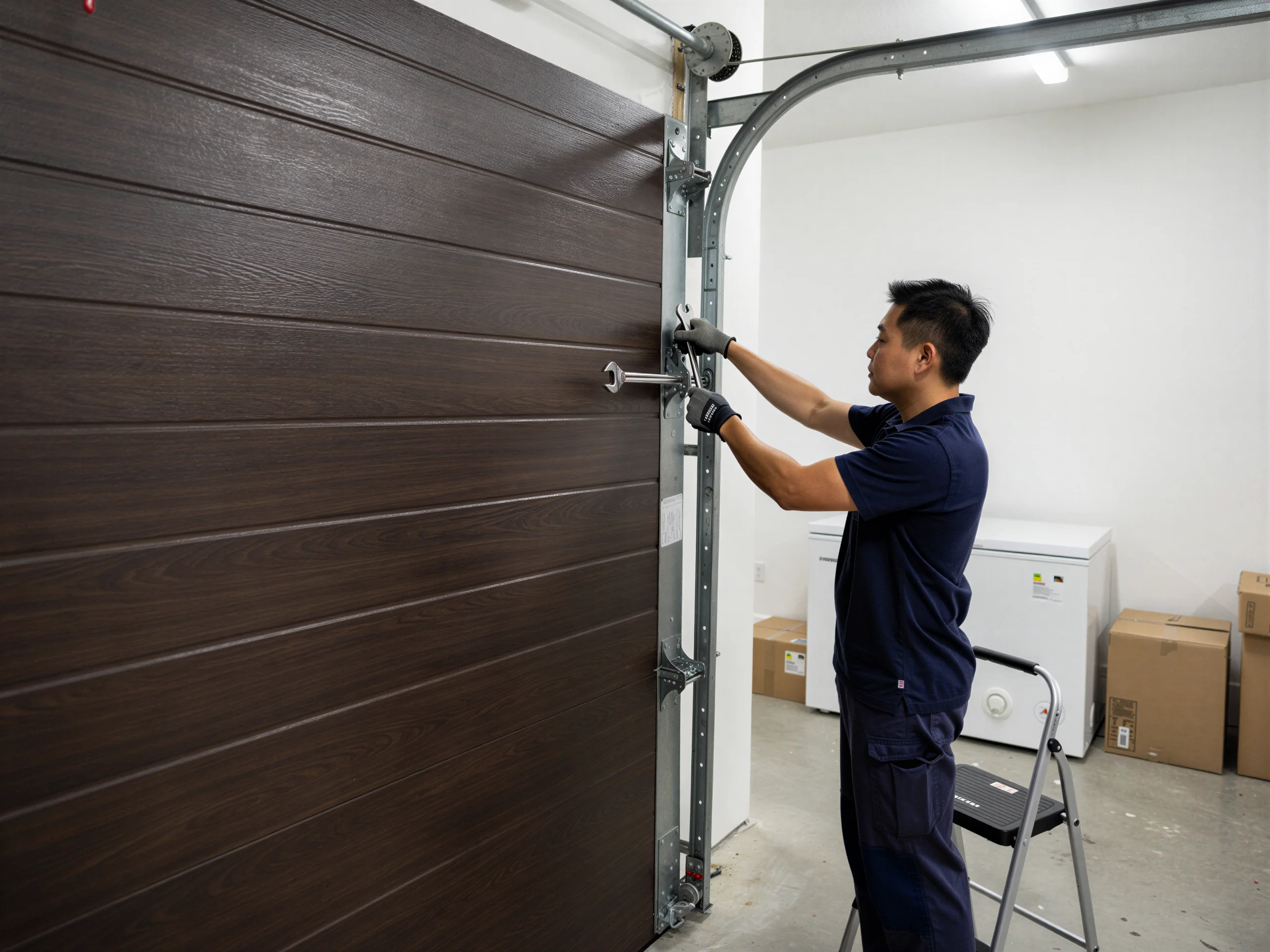
Torsion springs are wound under several hundred pounds of force and the tools to wind or unwind them safely aren't something most garage toolboxes have. Lubricating hinges and rollers with a garage-door-specific lubricant, and tightening visibly loose lag bolts on the track brackets, are both reasonable homeowner tasks on a door from this era.
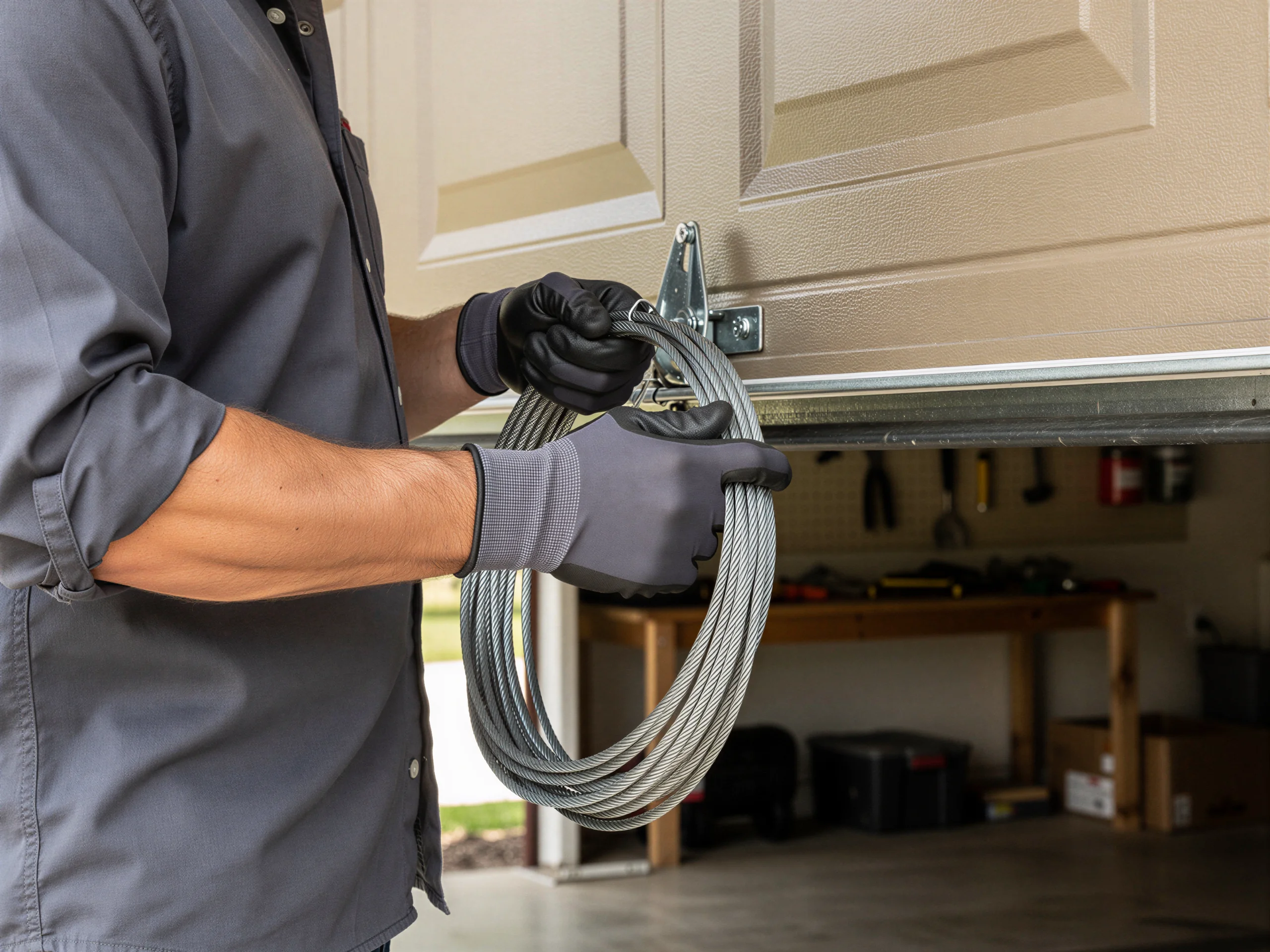
Replacing a spring, a cable, or re-aligning a bent track is not - on hardware this old, the mounting hardware itself is often as worn as the part you're trying to fix, and that's easy to miss without doing this daily.
The repair
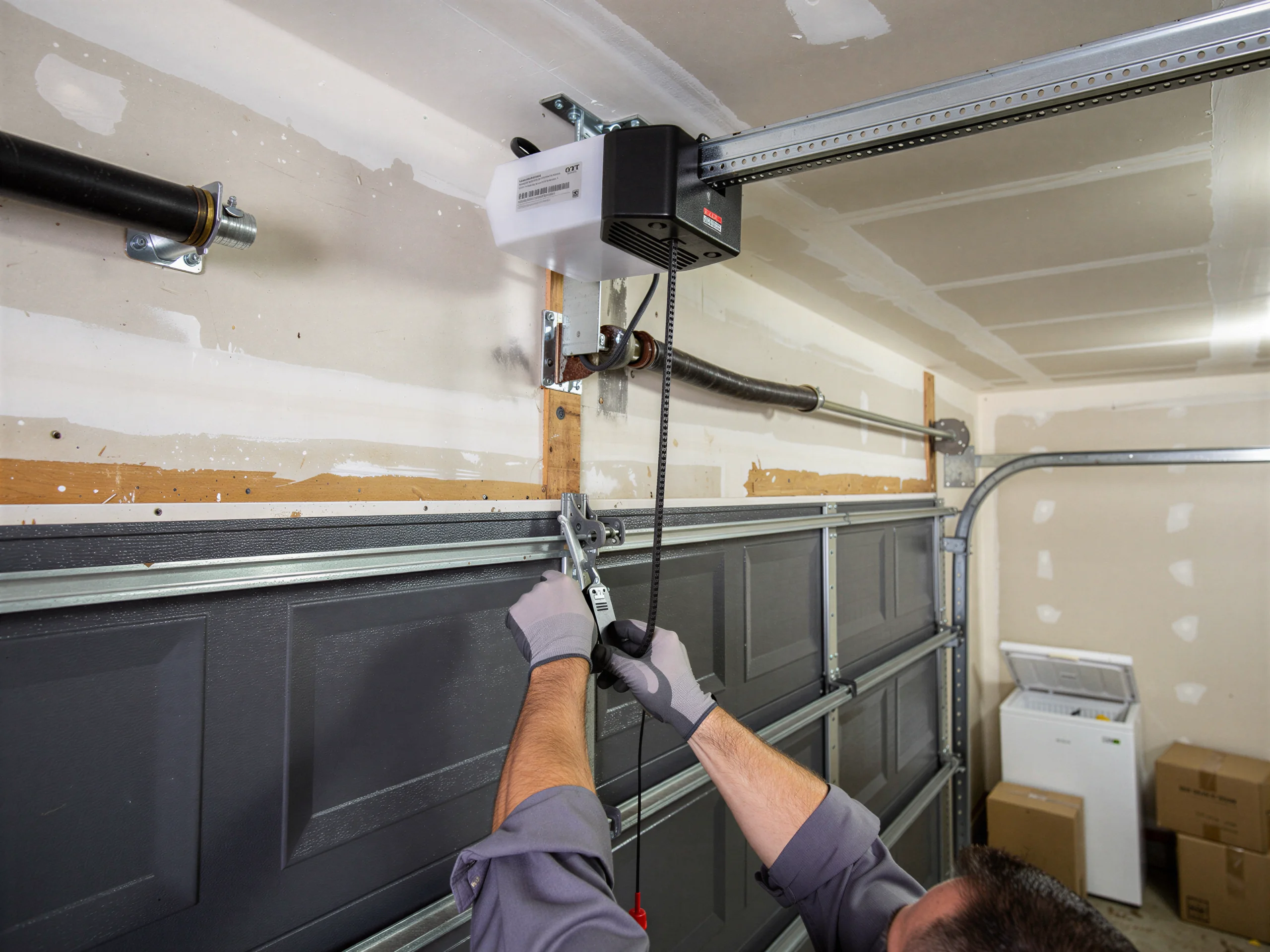
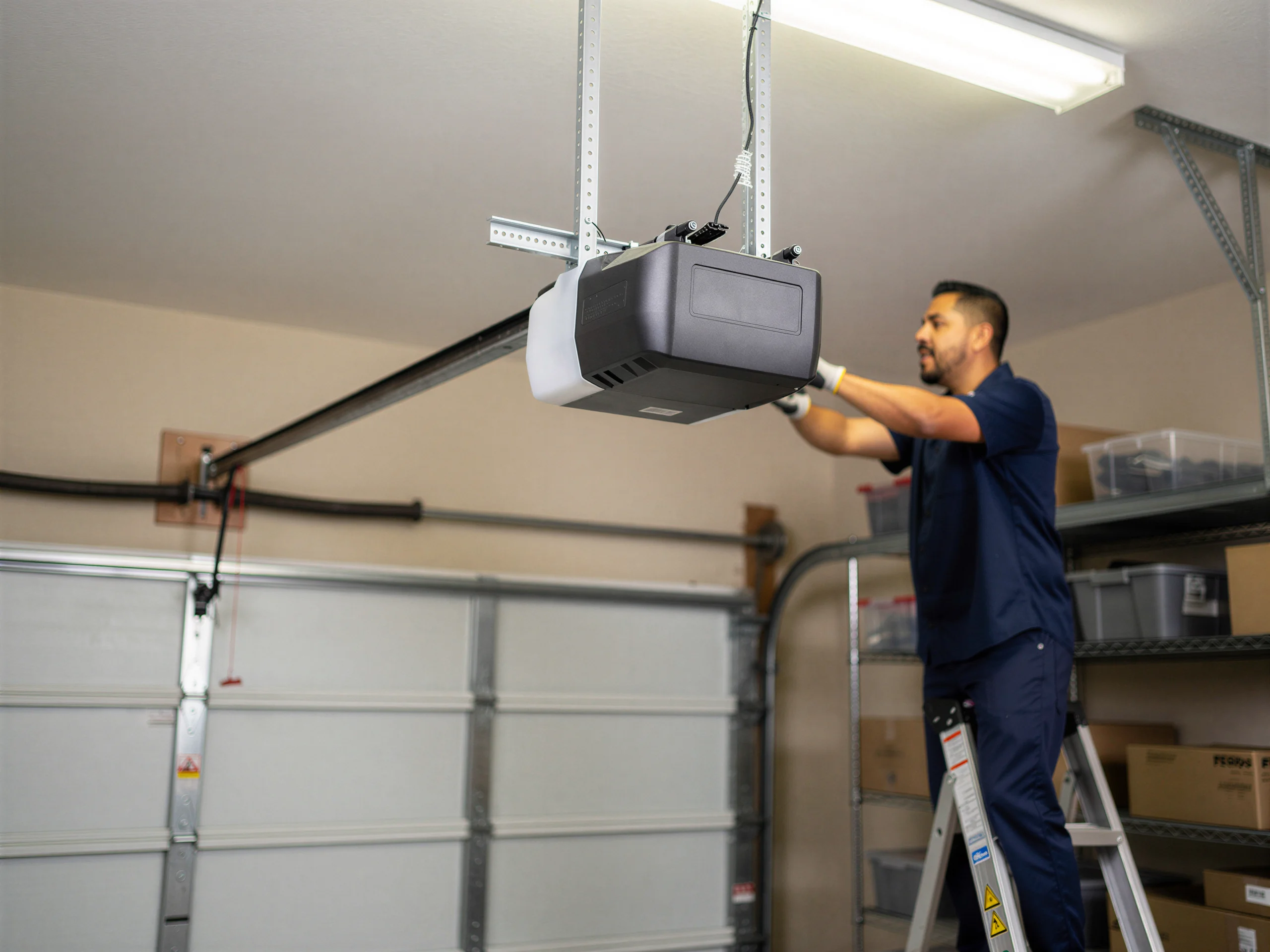
On a 1979-era door, the first step is almost always confirming what's actually original versus what's been replaced. A lot of these doors have had the opener swapped once already - often in the 1990s or 2000s - while the spring, track, and drums are untouched since installation. That means a spring replacement job here often turns into measuring wire gauge and inside diameter by hand rather than pulling from a modern parts chart. We check the drums, the end bearing plates, and the track gauge before quoting, because mismatched or worn originals are common at this housing age. If the opener is also original or close to it, we'll flag chain wear and the condition of the safety reversal sensors - code and safety standards have moved on since these units were new, and we won't reinstall anything that doesn't meet current safety reversal requirements.
Watch-outs
The honest limitation: on doors this old, we sometimes find that the section steel itself has rusted or dented past the point where a spring or cable fix makes sense on its own.
When that happens, we'll tell you straight rather than patch a door that's going to fail again in a year. Another complication specific to 1970s-era housing is non-standard spring sizing - some original installs used wire gauges and spring lengths that aren't stocked on the truck, which can mean a second trip if we don't catch it during the first inspection.
We also see track widths that don't match current standard hardware, which slows a repair down even when the fix itself is simple. None of this is unique to any one house, but it's common enough on doors from this build era that we plan for it rather than assume a quick parts swap every time.
Pricing
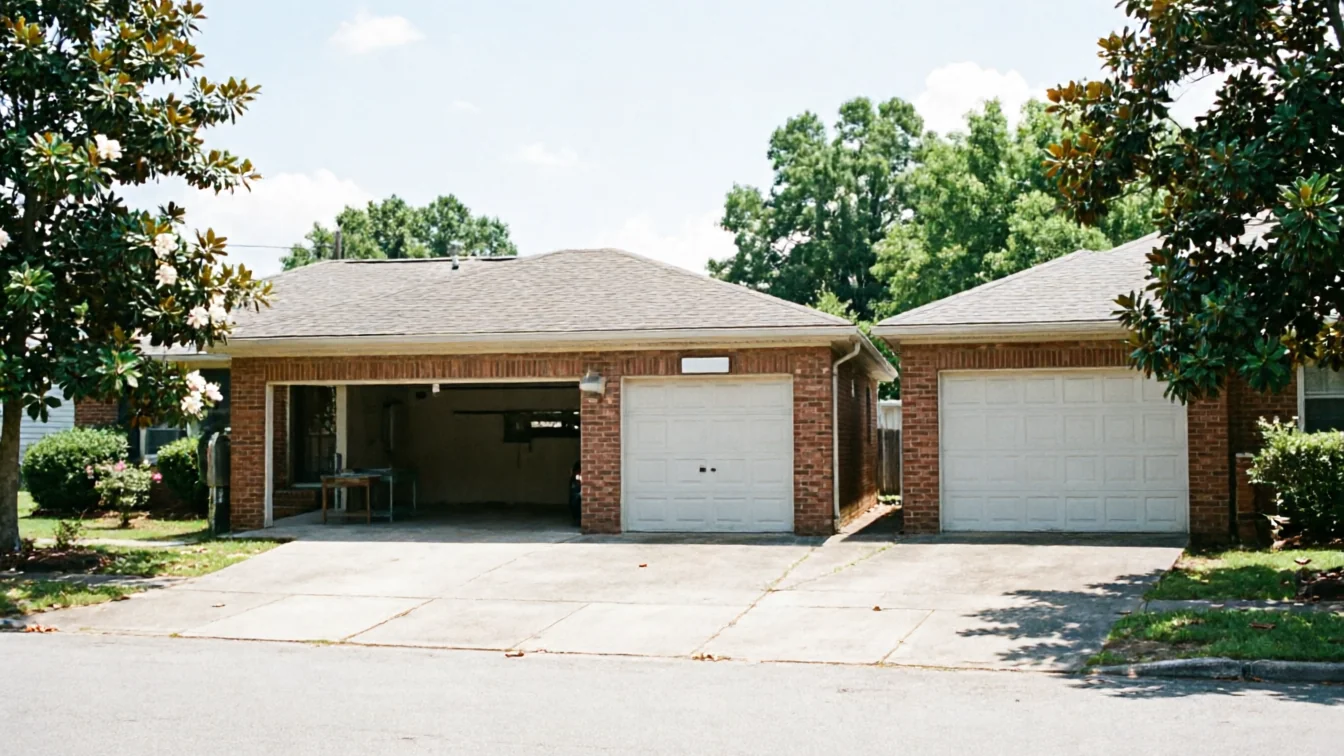
We don't have a posted price list for this page, and quoting a number without seeing the door and its age-specific hardware would be a guess, not a fact. What we can say is that Pleasant Garden's median household income runs higher than the broader Greensboro service area's $79,585 - at $88,482 for the roughly 2,037 households here - which doesn't set your price but does mean replacement-grade hardware is a realistic option when a repair on an older door isn't worth doing twice. The honest version: a spring or cable repair on a 1979-era door is often the cheaper path, but if the section steel or track is also failing, patching it piece by piece can cost more over two years than replacing the door once.
Questions
No. We're based in Greensboro and travel the 11 miles out to Pleasant Garden for service calls. There's no local branch or depot here, so scheduling depends on the day's route from Greensboro rather than a local dispatch.
Because the typical Pleasant Garden house dates to around 1979, which is earlier than the broader service area's 1987 median. Hardware from that era - spring sizing, track gauge, drum setup - often doesn't match what's stocked for newer doors, which changes how a repair gets diagnosed and parted.
We'd advise against it. Torsion springs hold several hundred pounds of wound tension, and on a door from the 1970s or 80s the mounting hardware is often as worn as the spring. Lubrication and bolt checks are fine DIY tasks; spring and cable work isn't.
No. On older doors we sometimes find rusted or dented section steel that a spring or cable fix won't solve. When that's the case we'll say so rather than patch a door that's likely to fail again within a year.
Explore more
Ready when you are
Greensboro Garage Door Pros repairs and installs garage doors, springs and openers in Greensboro, NC and the surrounding area.