
Cables and drums on hand
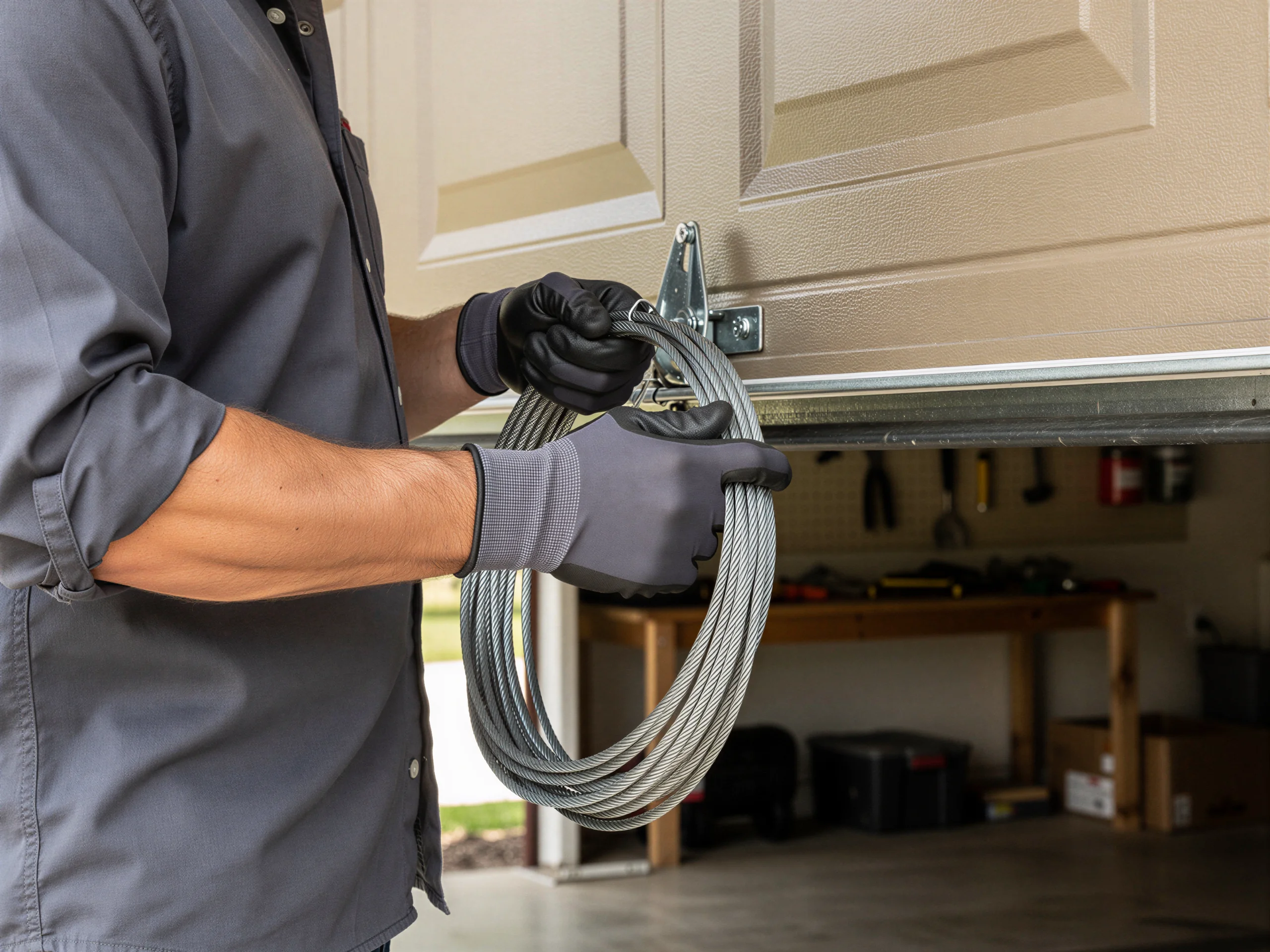
Most of what breaks on a Summerfield door is a lifting cable or the cable drum it winds onto, and both of those ride on the truck as standard stock because the housing here is consistent enough to predict what's needed.
Summerfield, Greensboro
Summerfield has about 3,861 households on newer 1990s-2000s lots. Cable failures here run different than older Greensboro stock. We drive out from Greensboro for the fix.
On the truck
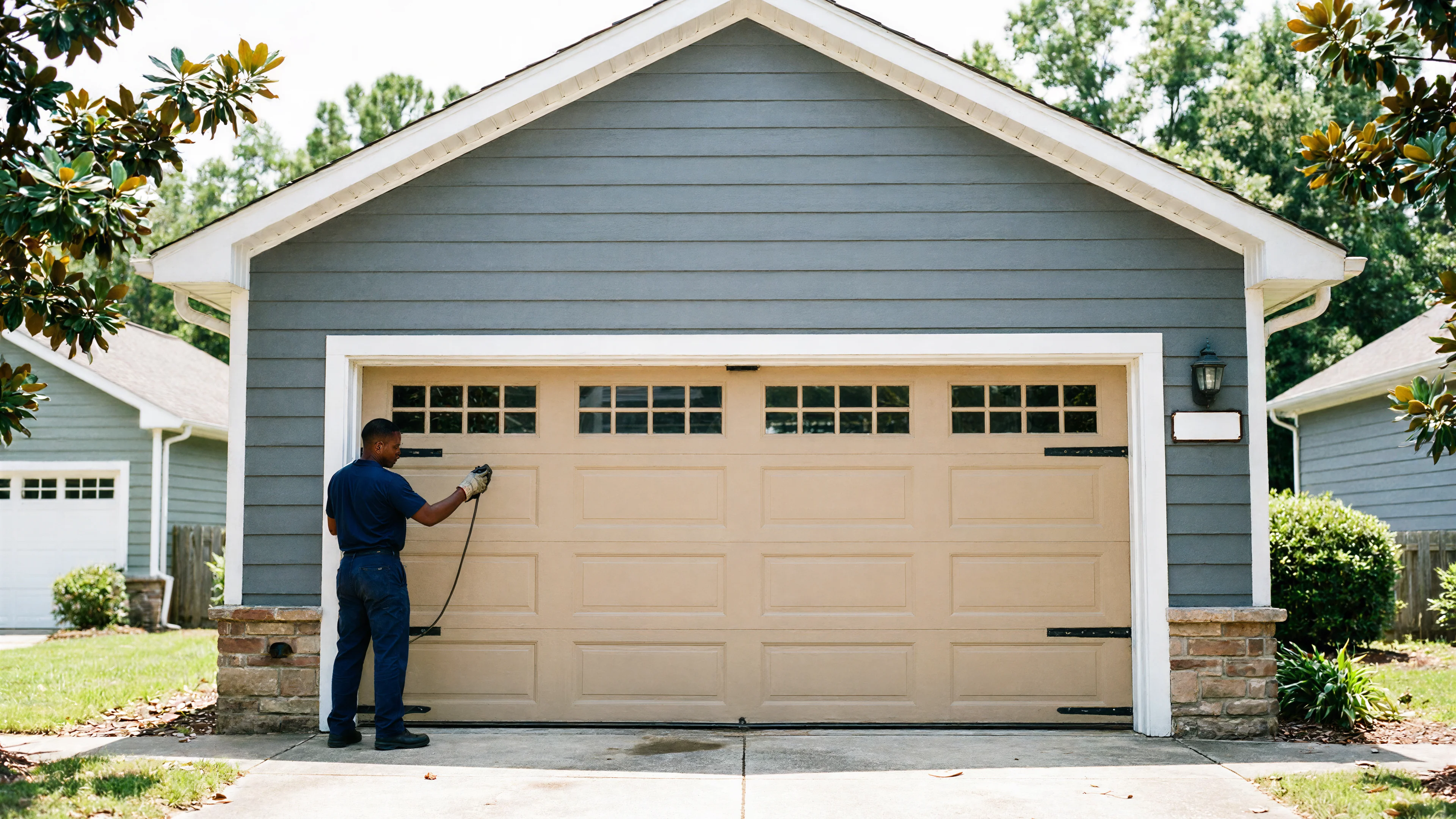
Summerfield is a small place - roughly 3,861 households, which is a fraction of the household count across the wider Greensboro service area. That matters for parts logistics: we don't keep a second stock of cable specifically for Summerfield, we load the truck in Greensboro before heading out the 8 miles to you.
Most of what breaks on a Summerfield door is a lifting cable or the cable drum it winds onto, and both of those ride on the truck as standard stock because the housing here is consistent enough to predict what's needed.
Since median construction in Summerfield runs around 1999, you're mostly looking at galvanized aircraft cable on torsion systems built for garage doors that weigh more than the older steel slab doors found on earlier stock elsewhere in the area. We carry cable in the gauges that match double and single doors from that era.
What we don't stock is anything custom - if your door was special-ordered with odd track spacing or a non-standard drum, that part has to be sourced before we can finish the job, and we'll tell you that up front rather than guess.
Watch-outs
A door built in 1999 usually has factory-installed torsion springs and cable drums sized to the door's actual weight, which is a different failure pattern than a hand-adjusted older setup.
When a cable frays or snaps on a newer door like most of what's in Summerfield, the spring tension is still high and the drum can unspool fast - that's the real hazard, not the cable itself.
The complication we run into most in Summerfield is the two-car door: heavier, double the drum load, and if one cable goes while the other holds, the door racks sideways in the track instead of dropping straight.
That bind can crease a panel or bend the track, turning a cable job into a track and panel job. We also see it on insulated doors, which are heavier than the hollow steel doors common in older neighborhoods, so the cable and drum are working harder from day one.
Local causes
Summerfield sits in a cold-moderate climate band, and the swing between winter cold and summer heat is hard on galvanized cable over a couple decades - the zinc coating degrades slowly, strand by strand, until one strand catches and the rest follow under load. Given the median build year of 1999, most Summerfield cable failures we'd expect now are coming from original hardware reaching the end of its service life around the twenty-to-twenty-five year mark, not from damage. We don't see rust-through the way you might on an older coastal setup; here it's more fatigue and corrosion working together on cable that's never been replaced since the house was built. A door that gets cycled twice a day for two decades straight wears the cable at the drum contact point first, which is usually where we find the fray.
The repair
We back the torsion spring off safely, pull the old cable and drum, check the drum groove for wear grooves that would chew through a new cable fast, and replace both cables as a pair even if only one failed - an unmatched pair just means the second one fails within the year.
On a Summerfield double door we re-tension and balance the door after, since a rebalance is the difference between a door that holds position and one that drifts.
If the track took a bend from a racked door, that gets straightened or replaced before we call the job done; running cable on a bent track just repeats the failure. The whole job, barring a sourced part, runs in a single visit from the Greensboro truck.
DIY or pro
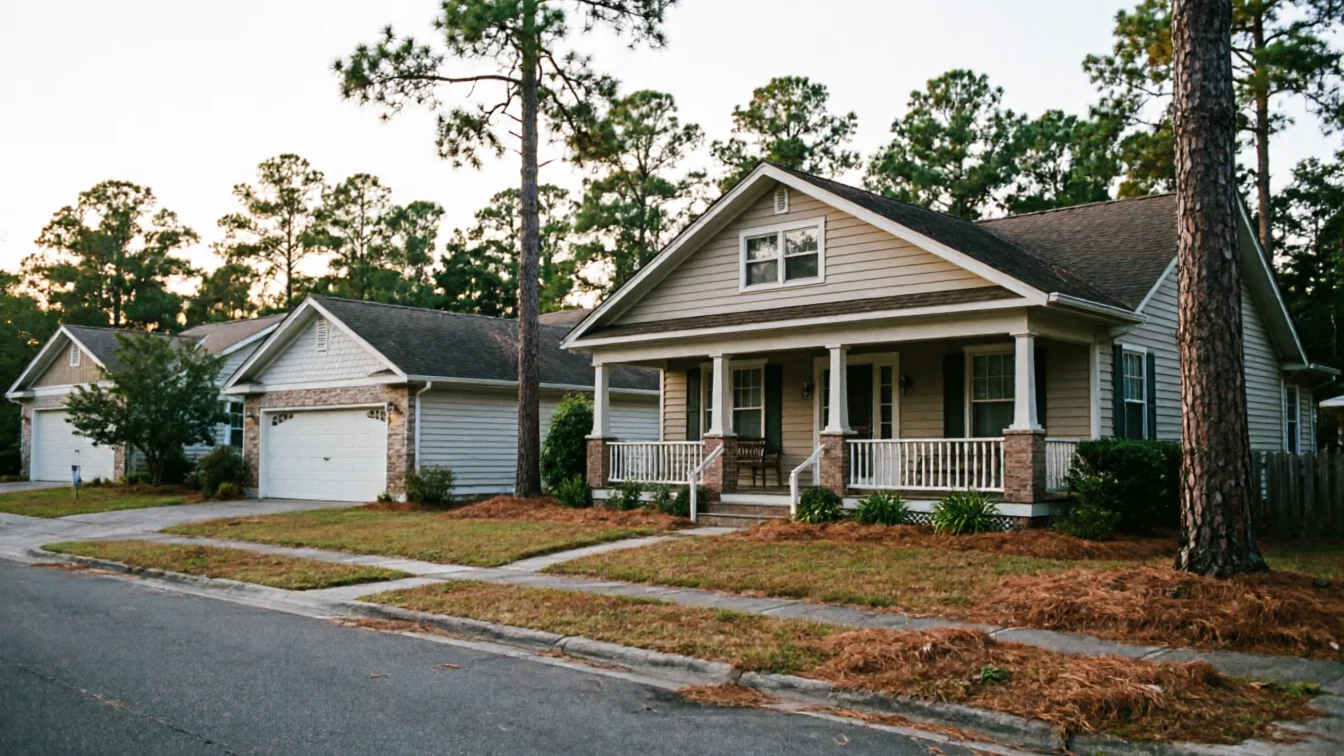
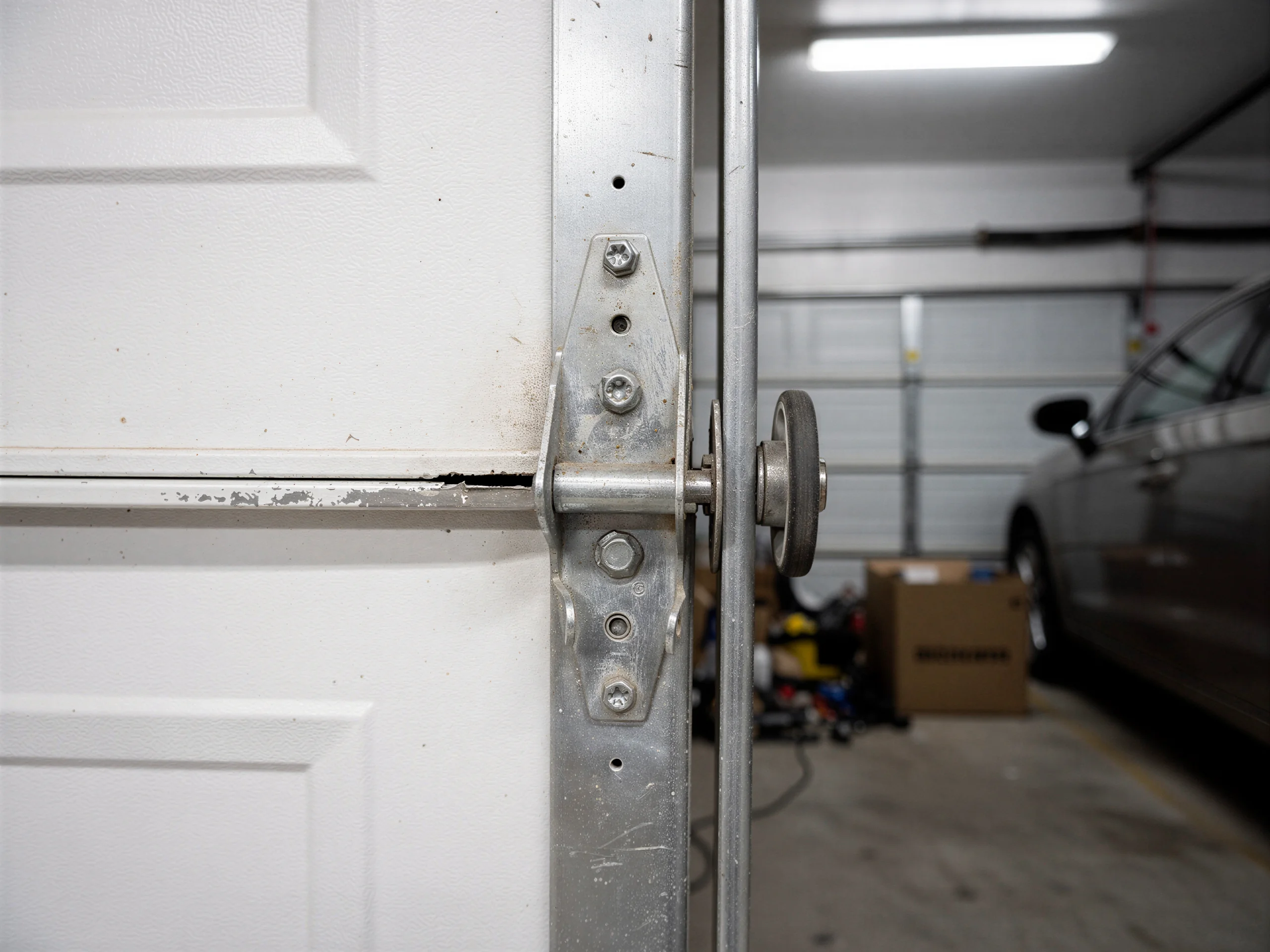
Don't try to replace a cable yourself while the spring is still under tension - that's the part of this job that puts people in the hospital, not the cable itself. You can do the inspection yourself: with the door closed and the opener disconnected, look at the cable where it wraps the drum, near the bottom bracket, for frayed strands or rust bloom. If you see either, stop using the door and call rather than cycle it again. What you shouldn't do is tighten or adjust the drum, loosen the spring set screws, or try to re-route a cable that's jumped the drum - all three require the door held under control, which takes a clamp and some practice most homeowners don't have reason to own.
Questions
Cable has a service life regardless of the house's age - galvanized strands fatigue from cycling and slowly corrode in our cold-moderate climate. Twenty-some years of two cycles a day is right in the range where original cable starts to fray, especially at the drum contact point.
No. We run from Greensboro, about 8 miles out, and load standard cable and drum stock for the door types common on Summerfield's 1990s-2000s housing before we leave. A non-standard drum or track size would need to be sourced first.
We replace both cables as a pair even when only one snapped. The surviving cable has the same age and wear as the one that failed, and running mismatched cable usually means a second service call within the year.
Not if the drum or track took damage from a racked door. In that case cable alone won't hold balance and the track or drum needs attention first - replacing cable on bent track just sets up the next failure.
Explore more
Ready when you are
Greensboro Garage Door Pros repairs and installs garage doors, springs and openers in Greensboro, NC and the surrounding area.